How Much Rock You Can Leave Under a New Lawn (Without Killing the Grass)

The Scenario
A homeowner recently asked:
"How deep is deep enough?"
The GardenOwl Diagnosis
The Assessment
New place, inherited mess. Along the back fence you’ve got what used to be a rock strip or path. You’ve already hauled out something like 700 kg of gravel, the mulch and scrappy shrubs are gone, and you’re staring at a trench of compacted dirt, leftover stones, and a lonely drain. Ignoring these issues often leads to Substrate Denial Syndrome, ruining both the usability and the curb appeal of the space. You just want a basic grass strip so the dog has a toilet, not a championship fairway, but without the right grade and sub-base prep, you'll likely create a 'mowing crater' that traps water or crispy patches where roots hit hot rock.
The question: how deep do you have to keep digging before it’s safe to stop and start building a lawn? And what do you do with that low drain sitting in the middle of everything?
This is exactly the sort of space people overwork or under‑prepare. Let’s not do either.
The Trap: Digging to China (or Not Digging at All)
Most people fall into one of two mistakes with an old gravel strip:
-
They try to remove every single stone. You’re out there like an archeologist, chasing one more layer of rocks because “roots need soil, right?” Meanwhile, your back is wrecked and you’ve lowered the grade so much you’ve just made a drainage problem.
-
They give up and throw 2 cm of topsoil over rubble. The grass looks fine for a few months, then summer hits. The thin soil dries out, the roots hit hot rock, and you get crispy patches where the dog already prefers to pee. Weeds that do like gravel happily move in.
Grass roots don’t need a bottomless loam pit, but they do need a rock‑free, reasonably deep layer of soil to stay cool, hold moisture, and anchor the turf. For a low‑maintenance, dog‑duty strip, the sweet spot is about 4–6 inches (10–15 cm) of decent soil above the leftover gravel.
The other trap here is the drain. Folks see a low drain and think they must carve the yard into a funnel so water finds it. That’s how you end up with a weird mowing crater in the middle of a tiny lawn — and a dog that trips in the hole at 10 pm.
The pro move is not a bowl. It’s raising the drain to work with a flat, easy‑to‑mow grade.
The Solution (Deep Dive)
1. When You Can Stop Digging Out Rock
Use these three checks. Once you pass them, stop digging and start building.
a. Rock size test
You’re fine to stop when the remaining gravel is mostly golf‑ball size or smaller. Fist‑sized boulders go; small rock can stay.
Why this works:
- Small gravel under a decent soil cap actually improves drainage and stability. It’s essentially a sub‑base.
- The problem is big chunks that block roots or create air pockets.
b. Shovel test
Grab a shovel and try to dig into the material under the gravel. If you can:
- get the blade in, and
- lever up a decent slice of soil beneath,
…you’re deep enough.
If the shovel just skates along a concrete‑hard layer, you either need to
- go a little deeper removing rock, or
- switch to loosening that hard layer (more on that in a minute).
c. Depth test
Once you’ve pulled the worst rock, you want to be able to add 4–6 inches (10–15 cm) of topsoil and still:
- stay a little below the patio concrete, and
- not bury the drain grate.
If adding that much soil would put you higher than the patio, you have two options:
- Dig more rock (drop the base level slightly), or
- Use 4 inches instead of 6 and make sure you get a good-quality soil.
For a dog lawn, 4 inches is usually enough as long as you water sensibly. Penn State Extension’s lawn care tips basically echo this: roots need a modest, consistent depth more than endless inches.
2. Loosen the Subsoil So Roots Can Punch Through
Once you’ve declared a truce with the gravel, deal with the hard pan underneath.
- Use a garden fork or mattock across the whole strip.
- Stab down 10–15 cm, wiggle, and move on.
- You’re not trying to turn it over, just crack it so water and roots can move.
This is especially important in clay. Clay holds water when wet and turns to brick when dry. Cracking it prevents water from skating sideways under your new soil and lets the dog lawn actually root down.
If your base is very sandy, the opposite issue shows up: it drains like a sieve. In that case, the topsoil you bring in should be richer in organic matter so it holds water. According to the EPA’s home composting guide, even 1–2 cm of compost mixed in can dramatically improve water retention.
3. Deal With the Drain the Right Way (Raise It, Don’t Bowl to It)
You mentioned the drain is low. Don’t sculpt the yard into a crater.
Here’s the better fix:
- Pop the grate off. Most of those square basin tops simply lift or screw off.
- Measure it. Common sizes (in metric) are easy to match.
- Buy a catch basin riser or extension in the same size at the hardware store. Plastic is fine and cheap.
- Dry‑fit the riser so the new grate height will sit:
- slightly (5–10 mm) above your finished turf level,
- roughly flush with or a touch below the patio.
- Backfill around the basin with coarse gravel or compacted soil so it won’t sink when you walk or mow near it.
Now, instead of pitching everything steeply down, you can:
- run a gentle overall fall (1–2%) toward the drain and the yard’s natural low side, or
- honestly, in a space this small, just keep it visually flat and even with a subtle pitch you hardly notice.
This is the same logic I used in a project where we hid a drain in a corner patio; you can see that approach in How We Hid an Ugly Stormwater Drain and Gained a Usable Corner Patio.
4. Bring In the Right Soil (and Enough of It)
You’re building a cap of good soil over so‑so sub‑base.
- Aim for 4–6 inches (10–15 cm) of a decent lawn mix or screened topsoil.
- Avoid “free fill” that’s mostly subsoil and rubble. You’re trying to escape that.
Spread it in two lifts:
- First lift: 5–7 cm. Rake roughly level and tamp lightly (feet or a light roller). Don’t pound it into concrete, just settle the air gaps.
- Second lift: another 5–7 cm to your target grade. Rake again, then drag a straight board over the top using the patio edge as reference.
Grade checks:
- Finished soil should sit a little below the patio (10–15 mm) so water doesn’t run back toward the house.
- Around the drain, you want the soil to kiss the riser, not form a bowl. A very subtle dip (you see it with a level, not your eyes) is enough.
If your local topsoil is low in organic content, blend in a thin layer of compost (about 1–2 cm) as you go. That will help hold moisture under dog traffic.
5. Seed or Lay Turf for a Dog Potty Lawn
Both work. For instant use and fewer bare patches, I’d lean to turf if your budget allows.
If you’re laying turf:
- Rake the soil smooth; remove obvious rocks and sticks.
- Water the soil lightly the day before so it’s moist, not muddy.
- Lay rolls tight together, staggering seams like brickwork.
- Roll or walk the turf in to press roots into contact.
- Trim around the drain so the grate is just visible and clear.
- Keep it consistently moist for 2–3 weeks so it can root before the dog goes full throttle on it.
If you’re seeding:
- Rake the top ~1 cm into a fine tilth.
- Broadcast seed at label rate (don’t “double up” – it just makes weak, crowded plants).
- Rake very lightly so most seed is just covered.
- Mulch with a thin layer of clean straw if birds are an issue.
- Mist, don’t blast, until germination.
Choose a tough, wear‑tolerant grass that suits your climate and sun exposure. Check the USDA Plant Hardiness Map (or your local equivalent) and pick varieties your local sod farms recommend for dog yards; they’ve already figured out what survives local summers and paws.
6. Optional: A Sanity Strip Along the Fence
Mowing a narrow strip smashed against a fence is annoying. You also don’t want grass blades and trimmer strings constantly beating up the wood.
Consider this tweak:
- Leave a 30–40 cm mulched strip along the fence.
- Edge it with a clean curve instead of a ruler‑straight bowling lane.
- Drop in a few tough, narrow native shrubs or grasses to soften the fence and give your dog some visual interest.
If you like this sort of side‑yard treatment, have a look at the approach in Narrow Side Return in Coastal Australia: How to Turn a Dead End Into a Native Green Screen — same problem, different climate, but the layout logic is identical.
Tools & materials for this repair
Three practical items that can make this repair easier.
Buy locally: Screened topsoil, compost, climate-appropriate seed or sod, and clean straw should be sourced locally.

VEVOR Garden Fork, 4-Tine Gardening Pitchfork with Fiberglass Handle, 45 in Heavy Duty Digging Fork with Y Grip, Forged Steel Spading Fork for Hay Potato Composting Transplanting Aeration
A strong fork for cracking compacted subsoil without completely turning it over.
Why it helps: Loosens hardpan in controlled spots so air and water can reach the new root zone.
View on Amazon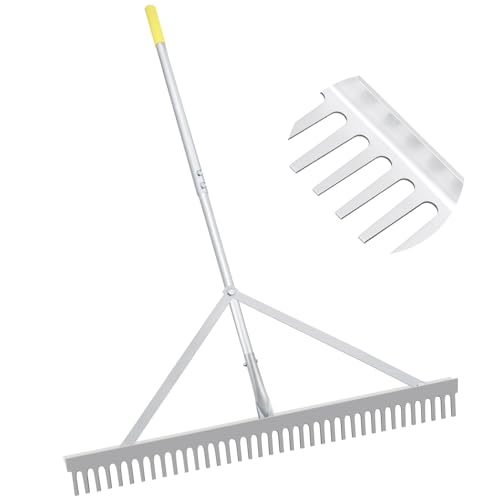
Byhagern Landscape Rake 36'', Aluminum Rakes with Lightweight 69'' Handle, Landscaping Rake Tool for Lawn Care, Beach
A broad rake for spreading the soil cap and creating a smooth, mowable grade.
Why it helps: Useful for leveling the two soil lifts around the patio and drain.
View on Amazon
NDS 1216 Catch Basin Riser and 1200 Square Catch Basin Drain, 12 Inch
A six-inch basin extension for lifting a low drain toward finished lawn height.
Why it helps: Raises a low drain toward finished grade; confirm it fits your existing 12-inch NDS basin.
View on AmazonAs an Amazon Associate, we earn from qualifying purchases.
Visualizing the Result Before You Order a Single Sod Roll
This kind of small, awkward space is exactly where people guess wrong on grade and layout:
- They set the soil too high and end up sending water back to the slab.
- They over‑dig near the drain and are stuck with a permanent mowing crater.
- Or they forget how tight the mower will feel against the fence and wish they’d kept a mulched strip.
You don’t have to find out the hard way.
Take a quick photo of your yard and use a design tool as a safety net:
- Sketch where you want lawn vs. mulch.
- Test different soil heights relative to the patio and drain.
- See whether that fence side should stay all turf or get a planted buffer.
If you want to test this on your own yard, upload a photo of your yard and see what this design would look like using our Exterior Design App.
Ready to see it on your own yard?
Use GardenDream to visualize ideas on your own photo before you make changes in real life.
Fast results ready in seconds
FAQs
1. Won’t the leftover gravel heat up and burn the grass roots?
2. Do I need landscape fabric between the gravel and new soil?
3. How soon can my dog start using the new turf?
• about 2–3 weeks for turf in warm weather, or
• 4–6 weeks from seeding.
Do the tug test: grab a handful and pull. If the sod lifts, it’s not ready. If it holds and you just pull blades, you’re good to go.
See more ideas for yards like this
If this yard problem looks familiar, these guides show broader design directions beyond this one example.
Small Backyard Ideas
Space-planning ideas for tight yards, awkward strips, pocket courtyards, and no-lawn layouts.
Backyard Patio Ideas
Patio-led layout ideas for seating zones, gravel extensions, paving choices, and better backyard flow.
Backyard Privacy Ideas
Layered privacy strategies for fences, patios, decks, slopes, and overlooked backyard edges.