The "Half-Cut" Mistake: How to Fix an Overgrown Texas Sage Without Ruining It

The Dilemma
A homeowner recently asked:
I have a massive Texas Sage taking over the corner of my house. Can I just cut it straight across the middle where I drew the line, or will that kill it?
The GardenOwl Diagnosis
The Scenario
You have a Texas Sage (Leucophyllum frutescens), also known as Cenizo or the "Barometer Bush." It started as a cute 1-gallon pot, and now it’s a monster eating the corner of your house. This common problem seriously detracts from your curb appeal and highlights one of the most frequent landscape design mistakes homeowners make. It’s blocking the view, rubbing against the gutters, and probably harboring a small ecosystem of lizards.
Your instinct is logical: it’s too tall, so you want to cut it in half. You’ve even drawn a line right across the middle where you think it should go. It feels like a haircut.
The Trap: The "Bundle of Sticks" Effect
Here is the hard truth: If you cut that plant at the line you drew, you are going to hate the result.
Texas Sage is a woody shrub. As it grows tall, the bottom branches turn into thick, hard wood, and the leaves concentrate at the top where the sunlight hits. If you slice it across the middle, you aren't creating a shorter bush; you are creating a flat-topped collection of ugly, leafless sticks. It will look like a bundle of firewood stuck in the ground.
Furthermore, if you do this "haircut" repeatedly, you create a thick callus of scarred wood at the cut line, preventing light from reaching the center. This is similar to the issue we discuss in The "Dead Zone": Why Your Hedge Turned Brown After Pruning. The plant will eventually leaf out, but it will look like a mushroom—skinny and bare at the bottom, dense and weird at the top.
The Solution: Rejuvenation Pruning
The good news? You can practically murder these plants and they will thank you for it. Texas Sage is incredibly resilient. The fix isn't a trim; it's a reset.
1. The "12-Inch Rule"
Instead of cutting at your line, go lower. Much lower. I recommend taking it down to 12 to 18 inches from the ground.
I know this sounds terrifying. You will be left with a few short stumps. But this forces the plant to push new growth from the base and the root flare. This is how you get that dense, full, "fluffy cloud" look from the ground up, rather than a tree-like shape with bare legs.
2. Timing is Critical
Do not do this in the fall or early winter. Pruning stimulates new growth. If you chop it now and the plant pushes out tender baby leaves, a sudden freeze will fry them. That stress can kill even a hardy native.
Wait until late winter or very early spring (typically late February or early March, depending on your zone). You want to cut it right before it wakes up for the season. Check the USDA Plant Hardiness Zone Map to know your average last frost date.
3. The "Ugly Phase"
Be mentally prepared: for about 6 to 8 weeks after the chop, your front yard will look a bit stark. It’s part of the process. Once the soil warms up, it will explode with new silver foliage.
4. Right Plant, Right Place
While you are staring at those stumps, check your spacing. If this plant is jammed right up against the foundation, you might have moisture issues. We see this often with awkward dirt strips next to foundations. If it's too close (less than 2 feet from the wall), dig it out while it's small and move it. If it has room, let it grow back.
Tools & materials for this repair
Three practical items that can make this repair easier.
Buy locally: Green-waste disposal and any replacement plant or soil amendment are better handled locally.

Fiskars 28-Inch Power-Lever Garden Bypass Lopper and Tree Trimmer, Sharp Precision-Ground Steel Blade for Cutting Branches up to 1.75-Inch Diameter
Long-handled bypass loppers for the main rejuvenation cuts on living wood.
Why it helps: Provides leverage while making cleaner cuts than an anvil-style tool.
View on Amazon
Corona Tools 13-Inch RazorTOOTH Pruning Saw | Tree Saw Designed for Single-Hand Use | Curved Blade Hand Saw | Cuts Branches up to 7" in Diameter | RS 7120
A curved hand saw for branches beyond a lopper's rated capacity.
Why it helps: Handles the oldest central wood without the bulk and risk of a chainsaw.
View on Amazon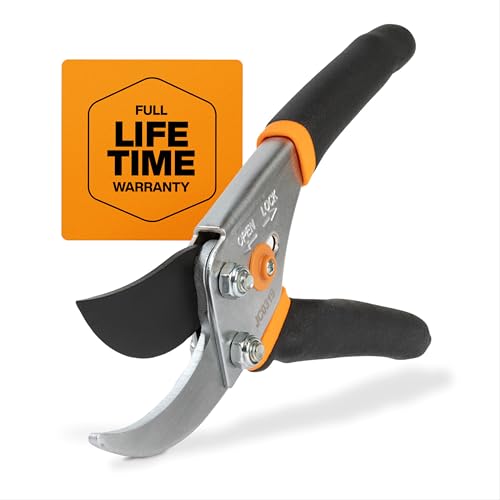
Fiskars Bypass Pruning Shears, 5/8" Cut Capacity Gardening Scissors, Self-Cleaning Sap Groove Prevents Sticking, Non-Slip Grip for Cutting Stems & Branches, Sharp Steel Blades w/ Low-Friction Coating
Hand pruners for small stems, selective cleanup, and later maintenance.
Why it helps: Lets you thin and shape new growth one stem at a time.
View on AmazonAs an Amazon Associate, we earn from qualifying purchases.
Visualizing the Result
It is hard to pull the trigger on a chainsaw when you can't see the future. You worry you'll be left with a hole in your landscape forever. This is where GardenDream acts as your safety net.
By uploading a photo of your overgrown shrub, our AI analyzes the species and the spatial context. It can show you exactly what a rejuvenation prune will look like once it grows back—dense, flowering, and properly scaled—versus the woody mess you'd get from a top-cut. It helps you distinguish between a plant that needs a trim and a plant that needs a restart.
If you want to spot hidden opportunities in your own yard or validate a drastic pruning decision, use our Exterior Design App to get an instant diagnosis and visualize the transformation.
Ready to see it on your own yard?
Use GardenDream to visualize ideas on your own photo before you make changes in real life.
Fast results ready in seconds
FAQs
1. Why isn't my Texas Sage blooming?
2. Can I shape Texas Sage into a square hedge?
3. Do I need to water it after the hard prune?
See more ideas for yards like this
If this yard problem looks familiar, these guides show broader design directions beyond this one example.
Sloped Backyard Ideas
Usable-level planning for hillsides, terraces, planted slopes, erosion control, and access paths.
Backyard Privacy Ideas
Layered privacy strategies for fences, patios, decks, slopes, and overlooked backyard edges.
Side Yard Ideas
Narrow-space ideas for access paths, utility screening, drainage-prone corridors, and side-yard destinations.