Backyard Privacy Ideas
When homeowners search for backyard privacy ideas, they usually picture a tall, solid wall of green at the edge of their property. But true privacy is rarely achieved with a single generic barrier. The right solution depends entirely on how your yard is exposed—whether you are dealing with a direct line of sight from a rear neighbor, second-story windows looking down into your pool, or side-angle visibility from a corner lot. Throwing a straight line of identical evergreens at the problem without diagnosing the specific exposure usually results in a yard that feels boxed in and harder to maintain.
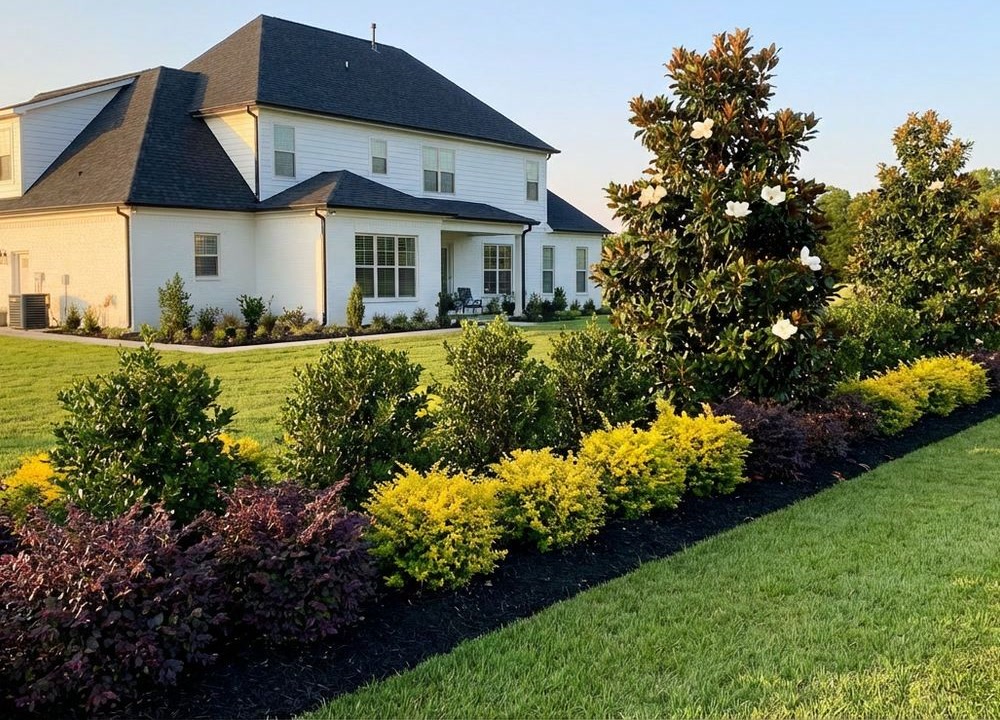
When homeowners search for backyard privacy ideas, they usually picture a tall, solid wall of green at the edge of their property. But true privacy is rarely achieved with a single generic barrier. The right solution depends entirely on how your yard is exposed—whether you are dealing with a direct line of sight from a rear neighbor, second-story windows looking down into your pool, or side-angle visibility from a corner lot. Throwing a straight line of identical evergreens at the problem without diagnosing the specific exposure usually results in a yard that feels boxed in and harder to maintain.
Instead of defaulting to a massive hedge that boxes you in, successful landscape design matches the screening strategy to the specific vulnerability. By diagnosing exactly where your exposure is coming from and how much space you have to work with, you can build a privacy screen that preserves sunlight, maintains airflow, and thrives at its mature plant size. A well-planned privacy strategy creates a sense of seclusion without becoming a long-term maintenance nightmare.
Which Privacy Problem Are You Solving?
Before choosing a planting or structural solution, you must identify your exact exposure. A strategy that blocks a street-level view will completely fail to block a neighbor looking down from above. Review the situations below to pinpoint the exact privacy problem you need to solve.
- Neighbors can see straight into the patio: Your entertaining space is completely exposed to ground-floor windows or a shared property line, making every outdoor dinner feel public.
- Second-story windows overlook the yard: You are suffering from the "fishbowl" effect, where neighbors have a downward, elevated view into your private spaces.
- The fence line feels exposed and ugly: You have a boundary structure, but it is visually harsh, utilitarian, and fails to provide a sense of comfortable seclusion.
- The side yard has no room for a hedge: You need screening along a tight property boundary, but the planting bed is too narrow for standard broadleaf shrubs.
- The pool or hot tub needs privacy without closing in the yard: You need to block specific sightlines around a swimming area without dropping heavy leaf litter or completely blocking the sun.
- You want privacy without a tall green wall: You have a wide-open yard that requires soft, natural screening rather than a rigid, fortress-like monoculture hedge.
Best Backyard Privacy Ideas by Situation
Once you know exactly how your yard is exposed, you can select a strategy designed to defeat that specific sightline. Here are the most effective backyard privacy approaches categorized by the situations they solve best.
Layered Planting Privacy
- Best for: Wide backyards, soft screening, blocking multiple sightlines, and avoiding a fortress-like feel.
- Why it works: Instead of planting one rigid line of identical trees on the property boundary, layered planting staggers different species at varying depths and heights. It creates a thick, visually interesting canopy that intercepts side-angle visibility from corner lots and direct rear-neighbor exposure. By using a mix of evergreen backdrops, mid-story flowering shrubs, and lower perennials, it builds depth and natural softness. This strategy absorbs sound, diffuses wind, and creates a lush, estate-like feel.
- What to avoid: The Monoculture Screen Syndrome. Planting twenty identical Arborvitae or Green Giants in a straight row means that if one tree dies from bagworms or root rot, you are left with an obvious gap in your privacy screen.
- What it beats: It heavily outperforms a solid, monoculture hedge because a layered bed handles pests, disease, and varying light conditions with much more resilience. It gives a wide-open yard softness rather than turning it into a walled prison cell.
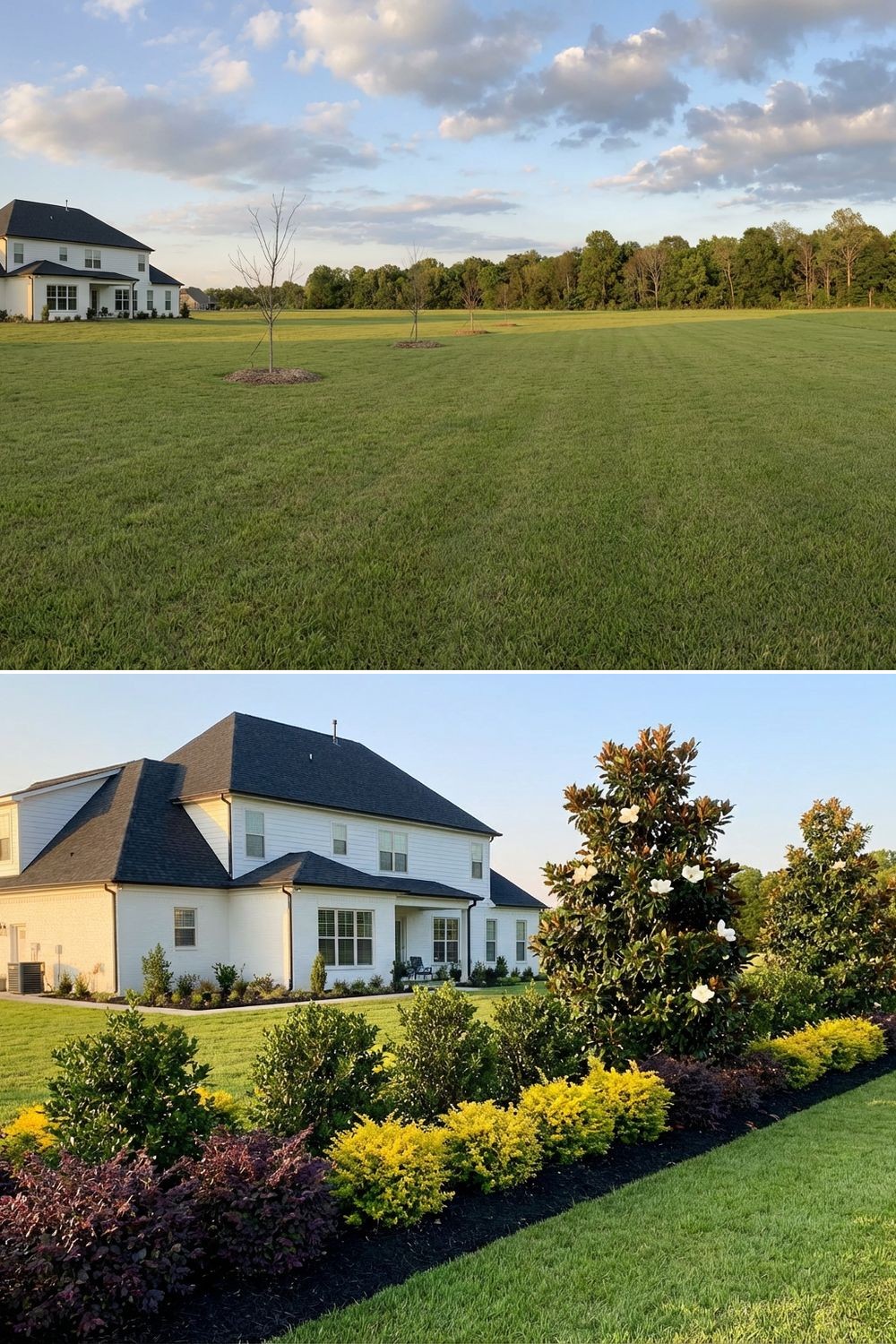
Layered planting blocks multiple sightlines and adds depth, avoiding the rigid, fortress-like feel of a single row of identical trees. Source: Stop Planting "Green Giant" Walls: How to Layer a Privacy Screen That Actually Looks Good.
Narrow-Strip Privacy
- Best for: Side-yard edges, tight fence setbacks, urban properties, and places where large shrubs will fail.
- Why it works: When you only have two or three feet of soil depth, you cannot rely on standard broadleaf evergreens. Narrow-strip privacy utilizes columnar trees, fastigiate shrubs, or vine-covered trellises that naturally grow tall and thin. This strategy respects the mature plant size and maintenance tolerance of the space, ensuring the roots will not heave adjacent hardscaping and the canopy will not swallow the walkway. It delivers vertical screening without horizontal bulk.
- What to avoid: Never force a large shrub like a standard Viburnum or Cherry Laurel into a 24-inch-wide bed. To keep it off the path, you will have to shear it constantly, leaving behind exposed woody stems and a hedge that never looks settled.
- What it beats: It beats the common attempt to prune wide-growing shrubs into narrow boxes. Selecting naturally narrow plants saves you from constant shearing and prevents the structural damage caused by overgrown root systems in tight corridors.
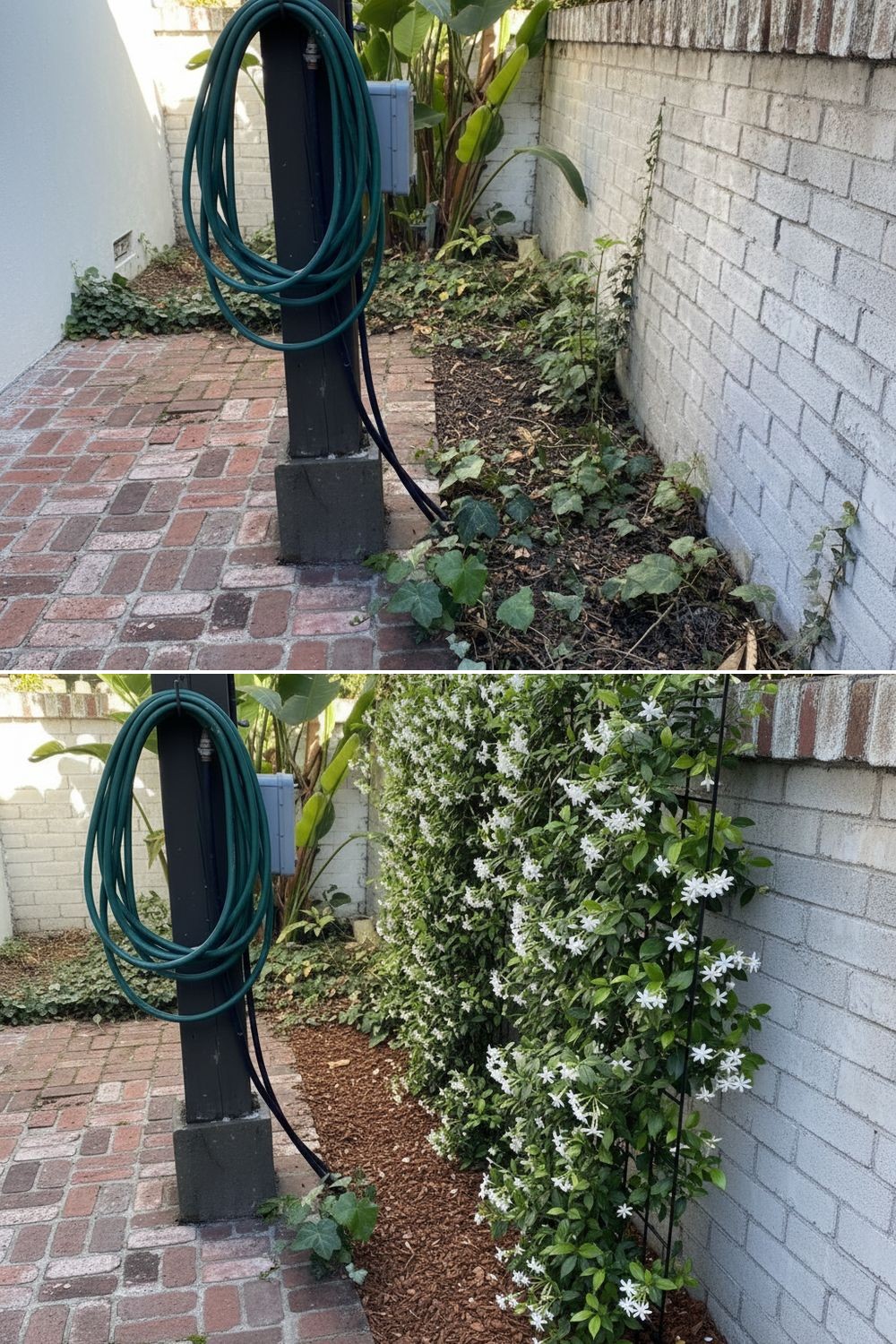
In narrow side yards, choosing plants with a naturally tight, upright habit prevents overgrown roots and endless shearing. Source: Planting a Tall Hedge in a 2-Foot Strip: What Actually Works in Los Angeles.
Patio Privacy Near Seating
- Best for: Exposed entertaining areas, small patios, direct lines of sight across the yard, and partial screening close to seating zones.
- Why it works: You do not always have to block the entire perimeter of your property to feel secluded. By bringing the privacy elements closer to the seating area—using tall planters, a strategic cluster of ornamental trees, or a short freestanding screen—you intercept the specific line of sight immediately. A small, six-foot screen placed three feet from your chair blocks the exact same angle as a massive forty-foot tree planted fifty feet away on the property line. It is highly efficient and creates an intimate outdoor room.
- What to avoid: The Polka Dot Pathology. Do not scatter individual, isolated shrubs randomly across the lawn hoping they will eventually merge to block the neighbor's patio. Designing for a single static viewpoint fails the moment you move your chair three feet to the left.
- What it beats: It beats waiting ten years for boundary trees to grow tall enough to block an angled view. Screening close to the seating zone provides immediate relief and creates an intimate outdoor room without requiring you to plant a massive hedge around the entire yard.
Pergola or Slatted-Screen Privacy
- Best for: Decks, hot tubs, overlooking second-story windows, and places where overhead or angled screening matters.
- Why it works: When neighbors look down from a second story, planting a hedge along a standard six-foot fence will not intercept their gaze. A pergola with a slatted roof or horizontal timber louvers provides overhead and high-angle privacy right where you need it. This structure-assisted privacy strategy physically blocks the downward sightline while allowing hot air to escape upward and breezes to flow through the sides. It is immediate, architectural, and highly functional for elevated decks.
- What to avoid: Bolting solid polycarbonate sheets or plywood to the sides of a deck. Solid walls block all ventilation, creating a stagnant heat trap that turns your outdoor seating area into an uncomfortable sauna during the summer months.
- What it beats: It beats planting giant shade trees and waiting decades for them to cast a canopy over your deck. Slatted screens offer instant privacy that preserves sun and airflow, keeping the space cool and comfortable from day one.
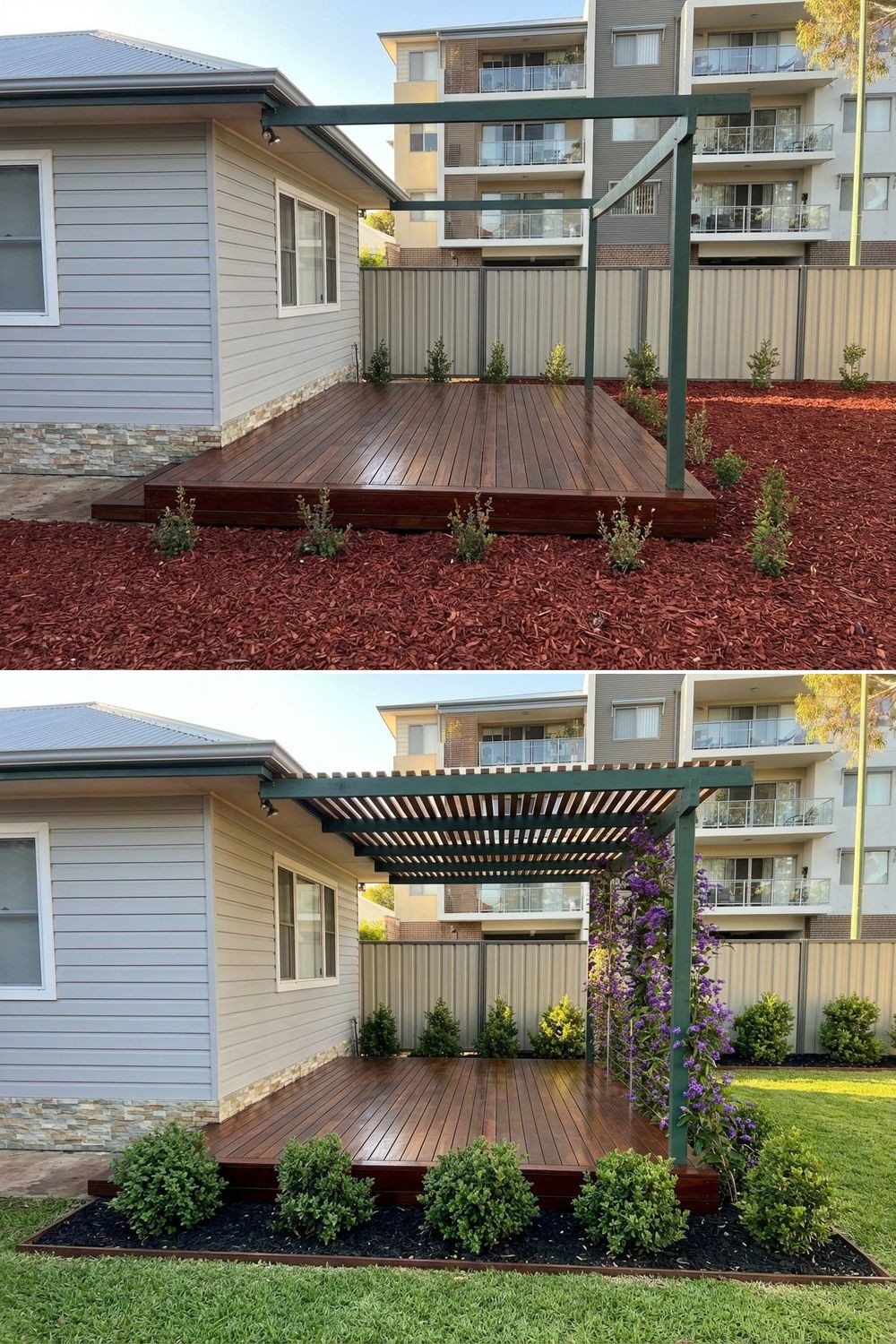
Slatted screens provide immediate privacy from elevated or street-level views without trapping heat like a solid wall. Source: The 'Fishbowl' Deck: How to Fix Privacy Without Building a Sauna.
Fence-Softening Privacy
- Best for: Ugly boundaries, existing fences that still feel exposed, chain-link perimeters, and visually harsh edges.
- Why it works: Sometimes the fence provides physical privacy, but the yard still feels cold, exposed, and utilitarian. Fence-softening privacy focuses on visual comfort rather than just building a taller wall. By planting a loose arrangement of ornamental grasses, climbing vines, or airy shrubs immediately in front of the fence, you break up the harsh horizontal lines. The foliage distracts the eye, making the boundary recede and creating the illusion of a deeper, softer landscape.
- What to avoid: Planting aggressive, woody vines like Wisteria or English Ivy directly against a wooden fence. These plants will pry the boards apart, trap moisture against the wood, and eventually destroy the structure you are trying to soften.
- What it beats: It beats painting an ugly fence dark green in the hopes it will disappear, or ripping down a structurally sound fence just because it looks harsh. Softening the boundary with layered textures is a highly cost-effective way to make a space feel lush and secluded.
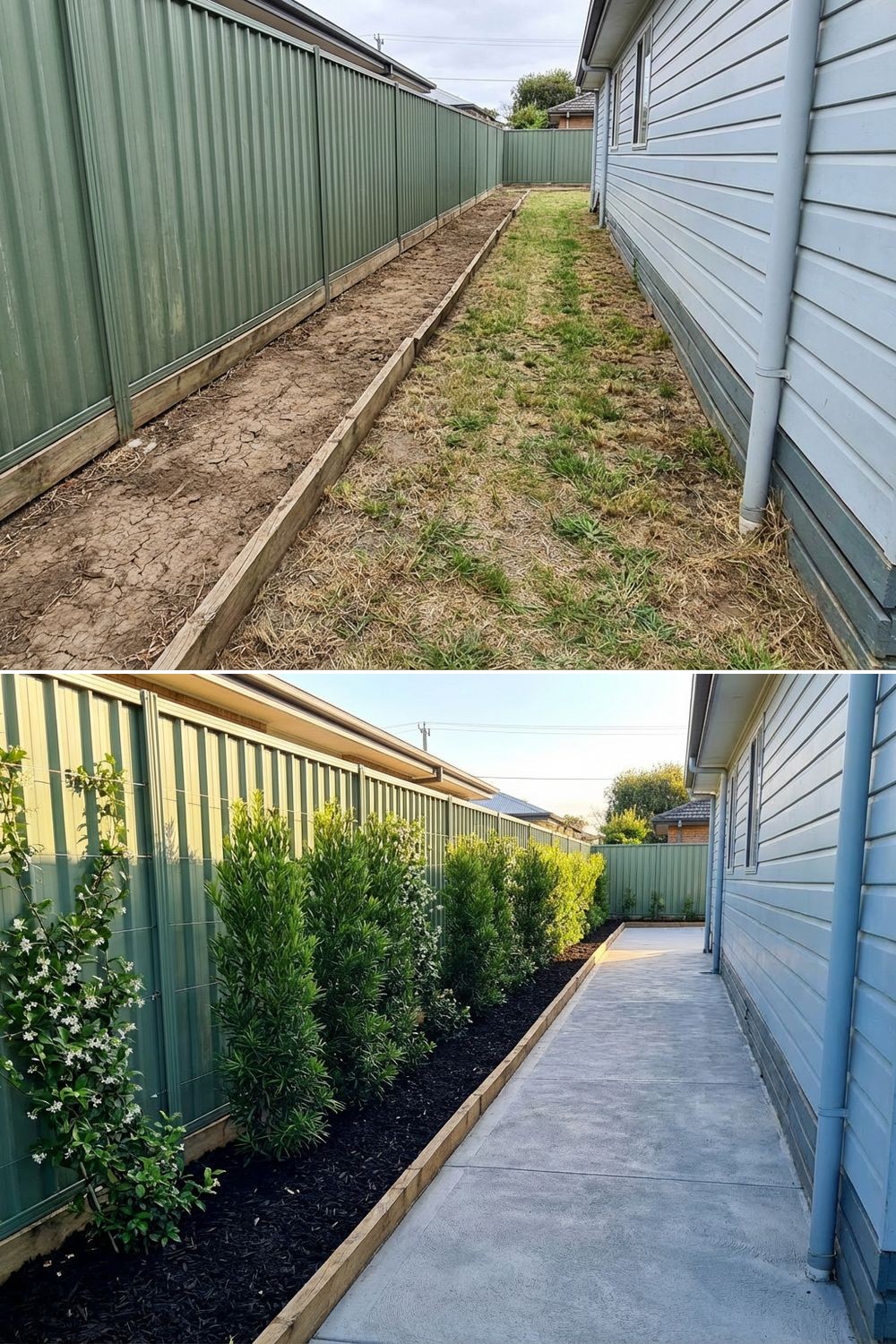
Fence-softening privacy focuses on breaking up harsh horizontal lines and adding visual comfort to an exposed boundary. Source: The "Green Wall" Trap: Why Viburnum Fails in Narrow Beds (And What to Plant Instead).
Pool and Hot-Tub Privacy
- Best for: Privacy-sensitive outdoor rooms, screening without heavy leaf litter, blocking downward angles, and yards that need air and light.
- Why it works: Pools and hot tubs require seclusion, but they also need sunlight to keep the water warm and open air to prevent the space from feeling damp and claustrophobic. The best strategy uses mid-sized, broadleaf evergreens or ornamental grasses placed strategically around the pool deck to block specific sightlines without boxing in the yard. This provides privacy from direct rear-neighbor exposure while keeping the canopy open enough to let the sun shine through.
- What to avoid: Do not try to plant small privacy shrubs directly underneath mature shade trees near the pool. The established trees will take most of the water and light, leaving the new screen thin and weak. Also avoid deciduous trees that drop heavy leaf litter directly into the skimmer basket.
- What it beats: It beats building a solid masonry wall around the pool. Strategic, targeted screening around a pool preserves the open, resort-like feel of the yard while ensuring you don't feel like you are on a public stage while swimming.
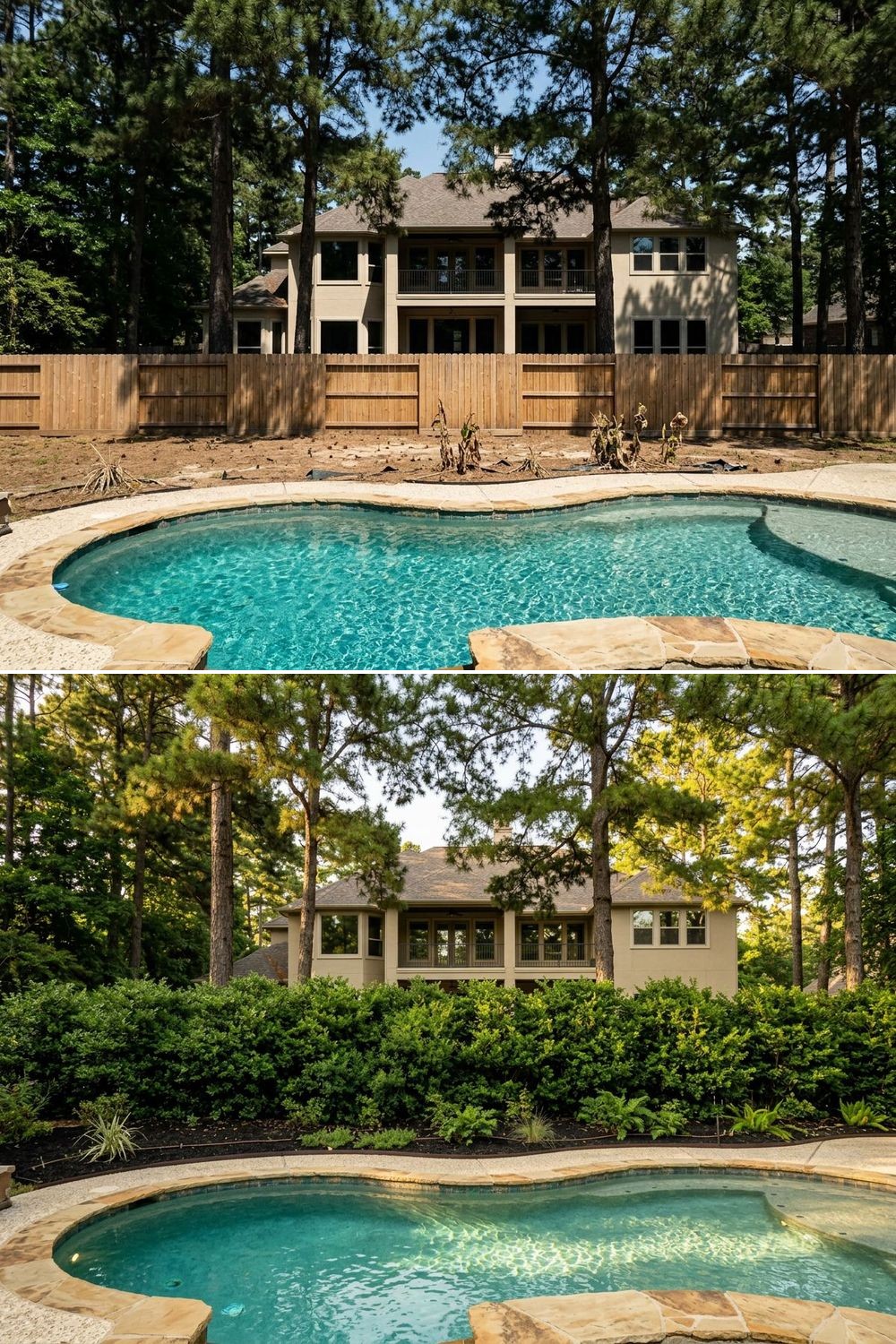
Effective pool privacy blocks downward sightlines from neighboring windows without dropping heavy leaf litter or completely blocking the sun. Source: Why Your Pool Privacy Trees Keep Dying (And How to Fix the 'Missing Middle Layer').
What Usually Goes Wrong
When homeowners rush to block a neighbor's view, they often make structural and horticultural mistakes that cost thousands of dollars to fix. Throwing plants at a property line without a strategy is a recipe for failure. Here are the most common ways backyard privacy projects go wrong:
- The Monoculture Screen Syndrome: Planting a single continuous row of identical evergreens creates a brittle ecosystem. If one tree catches a disease or dies from drought, the entire privacy wall is ruined by a permanent "missing tooth" that destroys the visual line.
- Large shrubs in narrow beds: Buying shrubs that naturally want to grow ten feet wide and cramming them into a two-foot side yard creates an endless cycle of harsh pruning. Over time, the hedge loses foliage, exposes woody stems, and still pushes into the walkway.
- The Polka Dot Pathology: Scattering individual trees randomly across the lawn to block specific windows. Because you move around your patio, these static, isolated plantings rarely block the sightlines in practice and leave the yard looking cluttered and chaotic.
- Root competition under mature trees: Planting a new privacy hedge directly under the canopy of a mature shade tree often fails because the established root system takes most of the water and nutrients before the hedge can establish.
- Trapping heat with solid screens: Bolting solid polycarbonate or plywood sheets to a deck or pergola to block a neighbor's view stops all airflow, turning an airy outdoor seating area into a stagnant, uncomfortable heat trap.
- Ignoring mature plant size: Planting fast-growing screens too close to fences, patios, or pool decks. Within a few years, the aggressive root systems lift pavers, crack concrete, and destroy the very hardscaping you were trying to enjoy.
- Failing to account for elevation: Planting a standard six-foot hedge to block a neighbor whose house sits on a hill above yours. Without calculating the angle of elevation, you will spend years waiting for a hedge to grow, only to realize it will never reach high enough to block their view.
Once You Know Your Privacy Strategy, Test It on Your Actual Yard
Reading about layered planting, narrow-strip screening, or structure-assisted privacy is only the first step. The real challenge is determining which of these approaches will actually block the neighbor's second-story window or soften your specific fence line without overwhelming your available space.
Once you know whether your yard needs layered planting, narrow screening, or a structure-assisted privacy solution, the next step is to test that direction on your actual space. Use the privacy landscaping app to compare the right privacy approach on your yard photo before you buy plants or build screens.
If privacy is only one part of a larger layout problem, use the AI backyard design app to test privacy screens alongside patio placement, planting beds, lawn shape, and outdoor seating.