Concept view
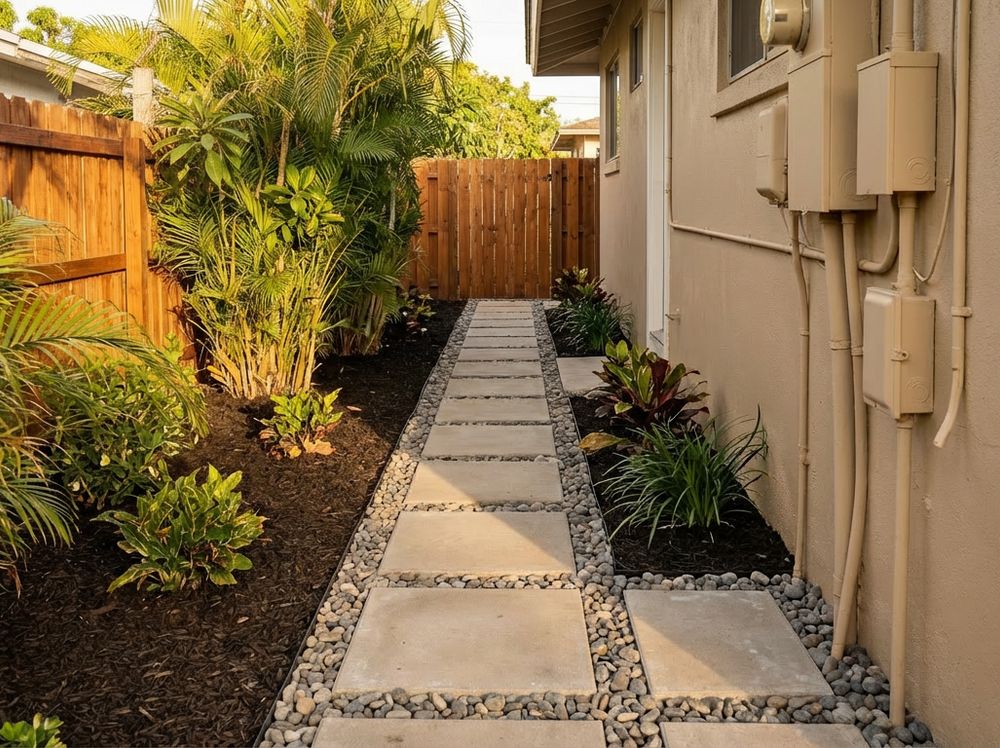
Path and access
Use a stable route that actually feels worth walking
A clear stepping path and calmer planting edge can turn a narrow side yard from an afterthought into a usable passage.
Visualize side yard ideas on your actual space. Compare access paths, narrow privacy screens, planting strips, and drainage fixes before you harden the wrong layout into a very unforgiving corridor.
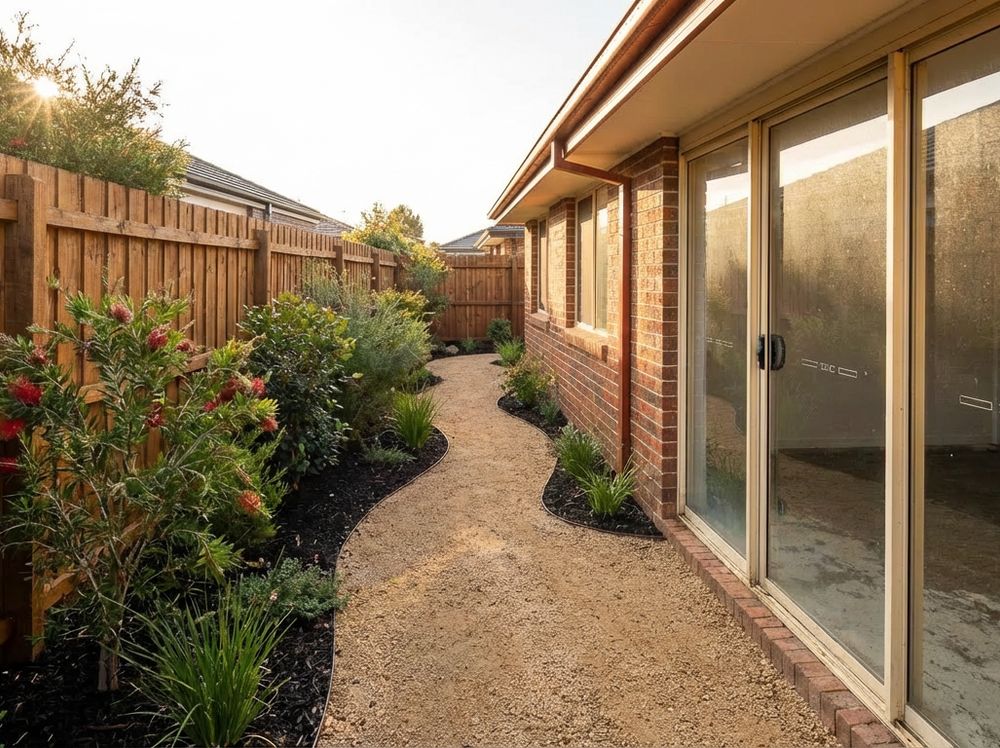
GardenDream helps you test whether the side yard should behave like an access route, a planted strip, a privacy corridor, or a utility zone that still looks resolved.
Use a photo that shows the full corridor or the part of the side yard where access, privacy, or drainage keeps breaking down.
Tell GardenDream whether the issue is mud, narrow width, exposed utilities, harsh sightlines, or a path that does not feel usable.
See realistic concepts that respect the actual width and the hard constraints of the corridor.
Refine the path, planting, or screen before you lock yourself into the wrong material or layout.
The best side yards usually work because access, screening, and edge planting are resolved together instead of fighting each other.
A clear stepping path and calmer planting edge can turn a narrow side yard from an afterthought into a usable passage.
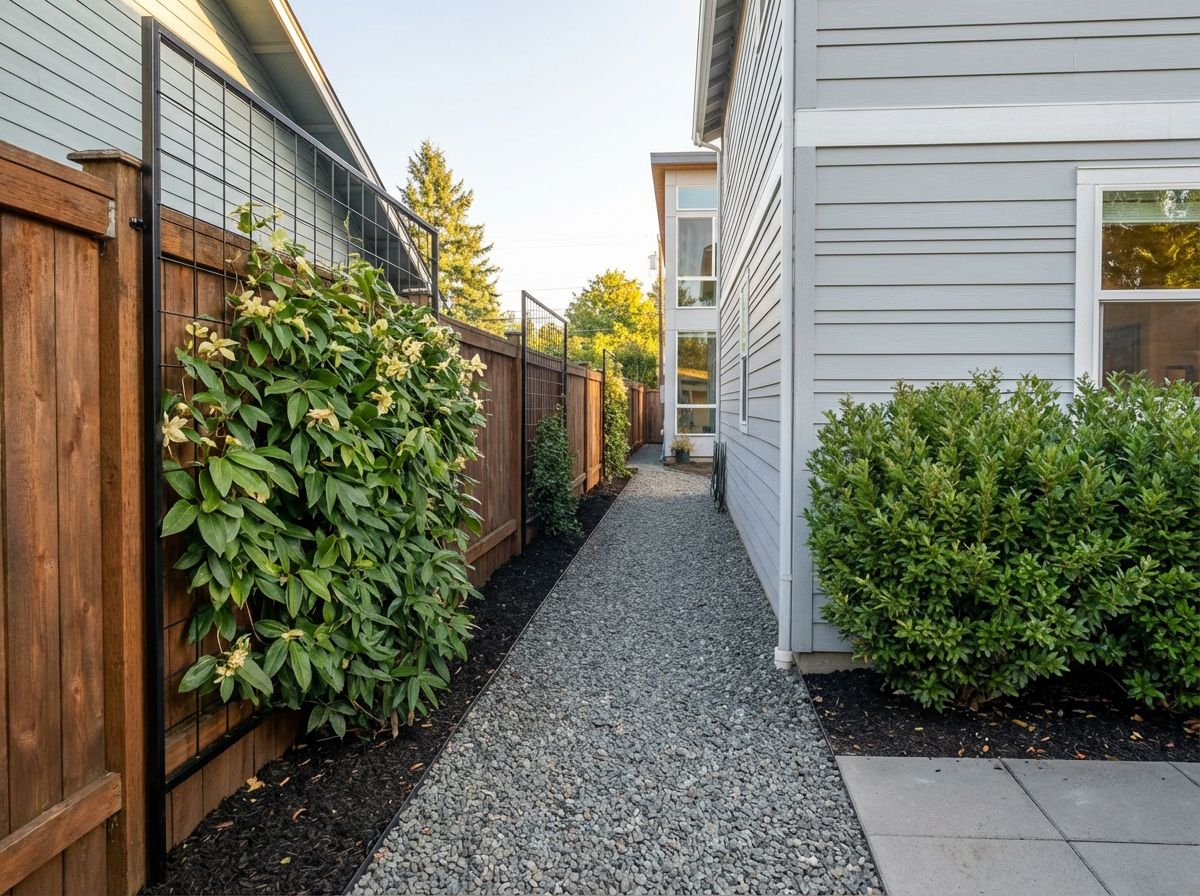
Slim supports, tighter planting, and the right scale can create privacy in spaces too narrow for big trees or bulky shrubs.
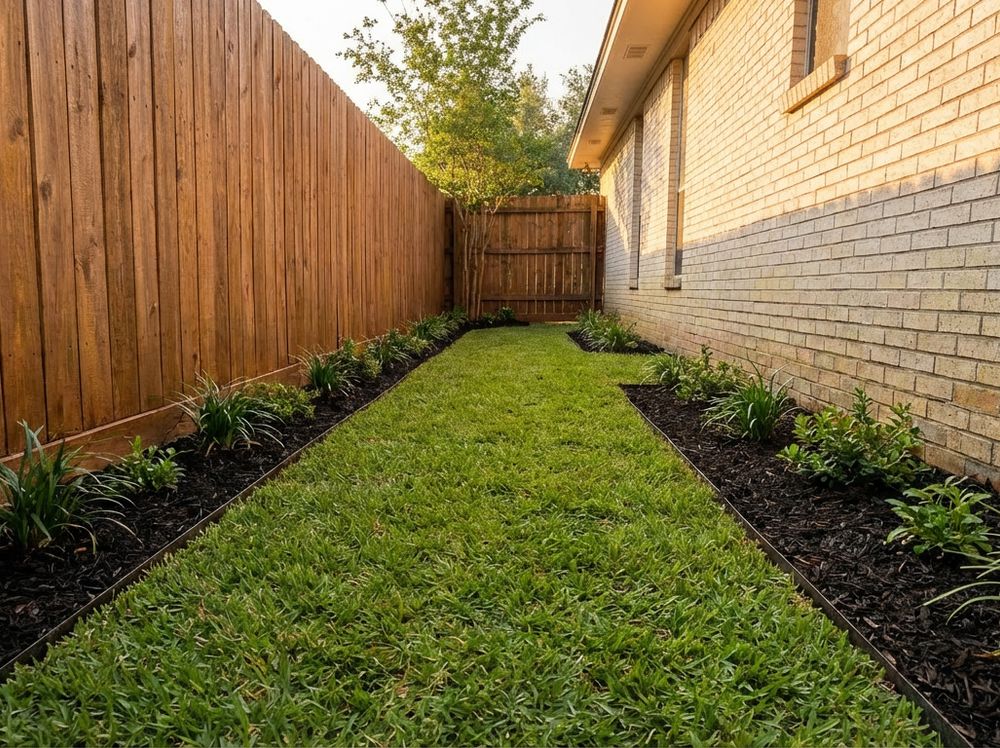
A side yard often needs stable footing and cleaner water handling before any decorative move will last.
Most side yards fail because too many jobs are fighting for the same narrow corridor.
A path or privacy idea that seems modest on paper can swallow the entire strip once it is built.
Meters, pipes, fences, and downspouts are often the real design drivers in a side yard.
Once gravel, concrete, or pavers go in, changing the corridor layout becomes the expensive part.
The best side yards are honest about what the corridor has to do. GardenDream helps you test access width, narrow privacy, stable footing, and edge planting on the actual strip so the result feels resolved instead of improvised.
See how the path can become wider-feeling, cleaner, and easier to use.
Compare trellis, screen, and slim planting options for tight spaces.
Test more stable surfaces and edge treatments before the corridor becomes harder to use every season.
Hide exposed infrastructure while keeping enough room to maintain it.
Access strips, utility zones, narrow planting, and compact side-yard ideas for tight spaces.
Useful when the side yard also needs screening from neighbors or adjacent properties.
Drainage ideas for side yards where runoff, mud, or unstable footing is the real issue.
A side yard design app helps you upload a photo of a narrow side space and test path, planting, screening, and utility-zone ideas before you build them.
Yes. GardenDream can help you compare side-yard directions on the real space so you can judge width, circulation, and access before spending money.
Yes. Side yards often need stable footing and better water handling before styling, and the tool can help you compare those approaches visually.
Yes. Narrow privacy is a strong use case because it is easy to choose plants or structures that are too big for the corridor.
No. You start with a photo and react to visual options, which is especially helpful in tight spaces with hard constraints.