Curb Appeal Ideas
Most curb appeal advice focuses on weekend projects: painting a front door, hanging a seasonal wreath, or swapping out a mailbox. But if your home's exterior feels fundamentally off, these cosmetic band-aids won't fix it. True curb appeal requires treating your house and landscape as a single, connected system. It is about getting the scale, sequence, and structure right before you ever pick up a paintbrush or buy a flat of annuals.
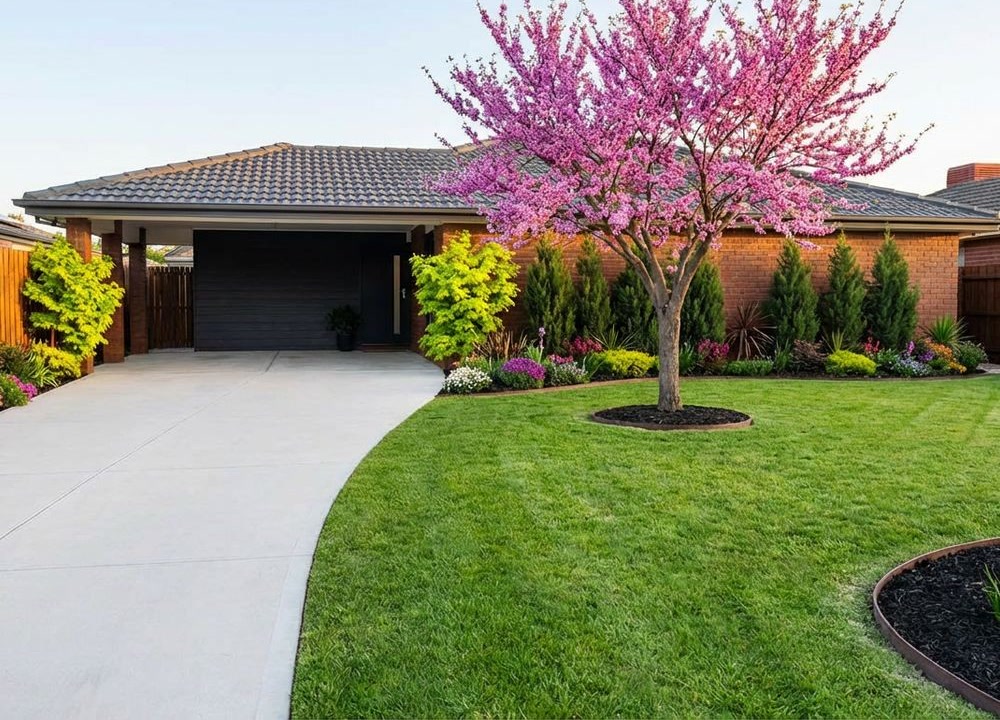
Most curb appeal advice focuses on weekend projects: painting a front door, hanging a seasonal wreath, or swapping out a mailbox. But if your home's exterior feels fundamentally off, these cosmetic band-aids won't fix it. True curb appeal requires treating your house and landscape as a single, connected system. It is about getting the scale, sequence, and structure right before you ever pick up a paintbrush or buy a flat of annuals.
To make meaningful improvements to your home's front, you have to move past decorative quick-fixes and evaluate how guests physically and visually approach your house.
Diagnosing Your Curb Appeal: Why Quick Fixes Often Fail
The first step in upgrading your exterior is stepping back to the street and looking at the house as a complete system. Homeowners often misdiagnose their curb appeal problems because they focus on isolated details rather than the broader picture.
Before making changes, you need to identify the real root of the issue: Is the architecture of the house unbalanced? Is the landscape overgrown or undersized? Or is the connection between the house and the yard failing?
Understanding the difference between structural landscape upgrades and decorative fixes is critical. A brightly painted front door will not fix a hidden or confusing entry sequence. If your front walk is cramped and uninviting, no amount of fresh paint or new hardware will make the house feel welcoming. You must solve the structural layout and wayfinding issues first, saving the cosmetic changes for last.
Fixing the Approach: Walkways, Driveways, and Entry Flow
Entry hierarchy and visual wayfinding dictate how easily someone can figure out where to park and how to get to your front door. In many homes, hardscape dominates the front yard, creating an unbalanced, utilitarian feel.
The most common entry failure is the "single-file walk of shame"—a narrow, concrete path pressed tight against the garage that forces guests to walk single-file from the driveway to the door. When an entry behaves like a corridor instead of a destination, it feels rushed and awkward.
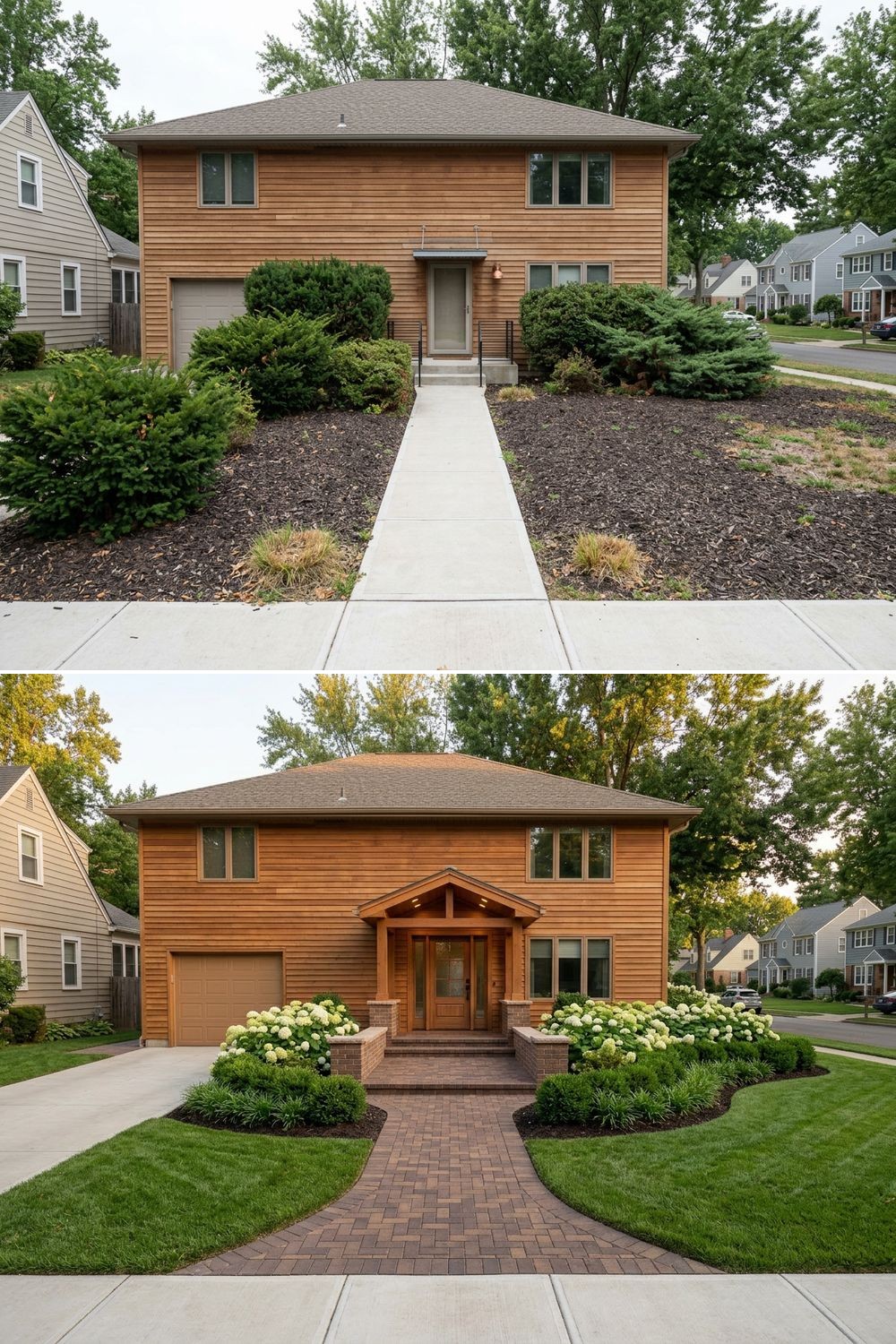
Widening a narrow walkway transforms an awkward corridor into a clear, welcoming destination. Source: Why Your Front Entry Looks Awkward.
- Walkway Width: A generous, welcoming entry walkway should be a minimum of 4 to 5 feet wide. This allows two people to walk side-by-side comfortably and visually matches the scale of a standard house.
- Taming the Driveway: Massive expanses of asphalt or concrete drag down curb appeal. Break up driveway dominance by adding cobblestone borders, brick ribbons, or strategic planting islands that visually separate the parking zone from the pedestrian zone.
- Clear Destinations: Your front door should be the obvious focal point. Use the lines of your walkway, the placement of landscape lighting, and the flow of your planting beds to physically guide the eye—and the guest—directly to the entrance.
Rethinking Foundation Landscaping: Scale and Depth
The standard builder-grade landscape usually consists of a 3-foot deep foundation bed tightly hugging the house, filled with a single row of tightly sheared shrubs. This shallow planting strip makes a house look top-heavy and disconnected from the ground.
To properly anchor your house, you have to kill the narrow foundation bed. Upgrading to deep, layered foundation beds completely changes the scale of the property and prevents the house from looking like it is floating above the lawn.
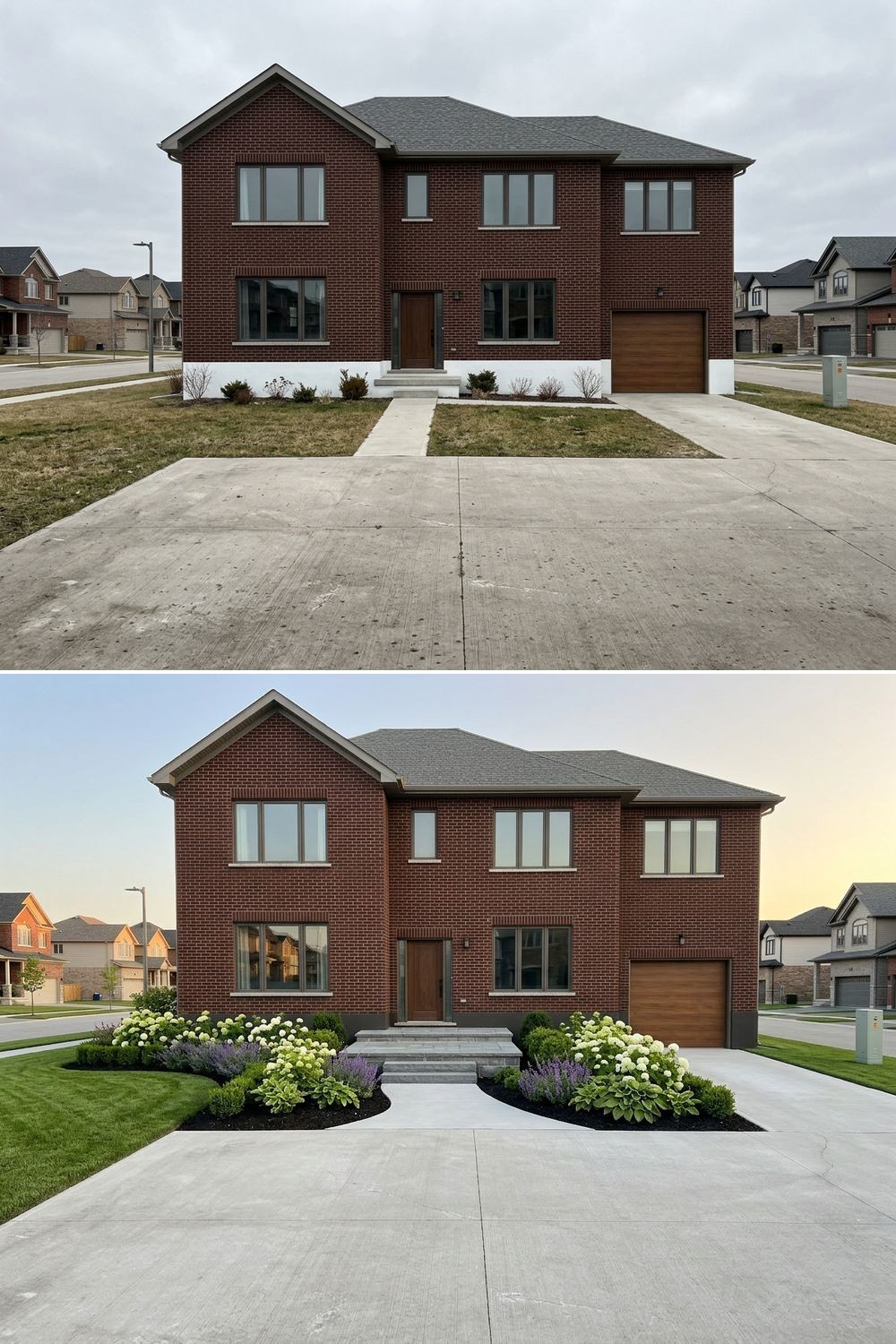
Pushing foundation beds out to 6 or 8 feet provides the visual weight needed to anchor the house to the site. Source: Why Your House Looks Like It Is Floating.
- The 6-to-8 Foot Rule: Foundation beds should be pushed out to a minimum depth of 6 to 8 feet. This allows enough room to step plants down in height—from taller backdrop shrubs against the foundation, to mid-sized perennials, down to low groundcovers at the front edge.
- Winter Structure: Relying entirely on seasonal color leaves your house looking barren for half the year. Build the backbone of your beds with evergreens for year-round structure, then layer in perennials for seasonal interest.
- Softening Corners: Hard architectural corners should be softened with appropriately sized small ornamental trees or large structural shrubs, grounding the edges of the home.
Architectural Updates: Porches, Columns, and Trim
Addressing the physical face of the house requires an eye for proportion and historical fit. Structural changes to the facade carry much more visual weight than cosmetic changes.
- Column Scale: One of the most frequent architectural missteps is the use of undersized "toothpick" porch columns. Replacing skimpy supports with properly scaled, robust columns immediately adds visual weight and architectural credibility to a porch.
- The Rule of Shutters: If your home has shutters, they must look functional, even if they are fixed. Shutters should be sized to actually cover the window if closed. Nailing narrow, decorative plastic strips next to a wide picture window breaks facade balance.
- Adding Depth: Flat, featureless facades benefit heavily from structural depth. Adding a portico, extending eaves, or incorporating correctly styled brackets can break up a massive, flat wall and provide necessary shadow lines.
- Trim and Framing: Updating outdated, thin, or rotting trim to a wider, more substantial profile helps properly frame the house and its windows.
Exterior Color Strategy: Paint, Brick, and Roof Coordination
Choosing exterior colors is rarely a blank-slate decision. Cohesive exterior color palettes are built by tying into the fixed, unchangeable elements of the home, ensuring the finish language doesn't fight the architecture.
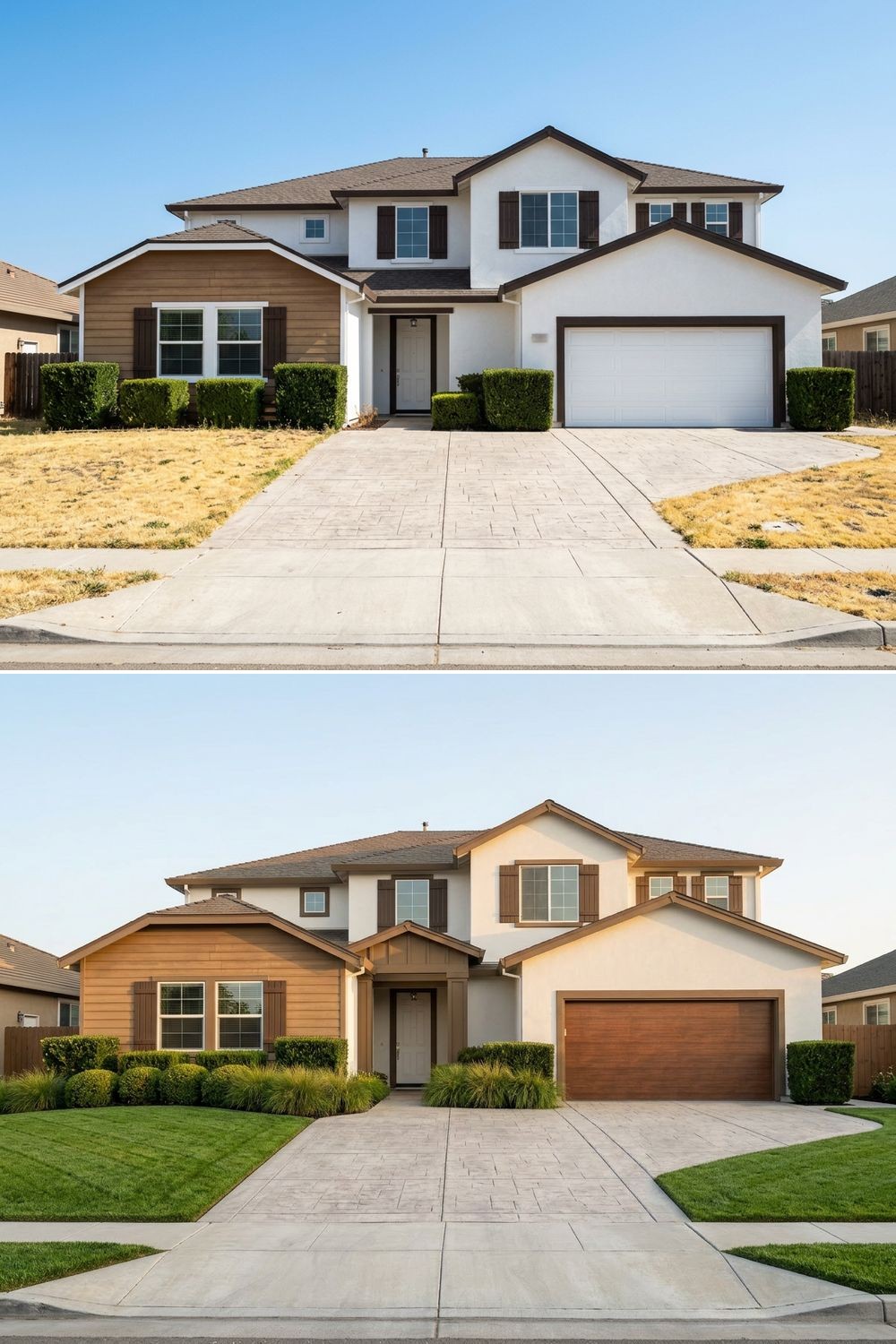
A cohesive exterior palette ties into the unchangeable elements of the home, like brick and roofing, rather than fighting them. Source: What Makes a House Look Dated (Even After You Repaint It).
Before looking at paint chips, identify the undertones of your existing brick, stone masonry, and roofing. A warm, brown-toned roof will clash with cool, blue-gray siding.
- Contrast and Cohesion: Choose siding, trim, and accent colors that create appropriate contrast without feeling disjointed. Disconnected trim and siding colors chop the house up visually, making it look smaller.
- Color Blocking: You can use strategic color blocking to highlight architectural strengths or camouflage awkward additions. Painting an unsightly garage door the same color as the body of the house helps it recede, allowing the front door to stand out.
- To Paint or Not to Paint: While painted brick is popular, it introduces long-term maintenance. Consider whether a lime wash, a masonry stain, or simply updating the surrounding siding and trim colors might achieve the desired update without trapping moisture in the brick.
High-Impact Details: Lighting, House Numbers, and Hardware
Lighting, house numbers, and door hardware are the "jewelry" of the house. These finishes should only be selected after the structural, scale, and color issues are resolved.
- Sizing Sconces: Most homeowners buy exterior light fixtures that are far too small. As a general rule, a front door sconce should be roughly one-quarter to one-third the height of the door itself to look proportionate from the street.
- Coordinating Finishes: Ensure your metal finishes—from the door handle to the mailbox, house numbers, and lighting—speak the same design language. They don't have to match perfectly, but they should share a cohesive undertone (e.g., all warm brasses and bronzes, or all cool nickels and matte blacks).
- Landscape Lighting: Good exterior lighting is about highlighting pathways and tree canopies, not just blasting the facade with floodlights. Use soft, directional path lights to reinforce entry wayfinding at night.
The biggest risk in upgrading your home's exterior is guessing at scale and color, only to realize the walkway is still too narrow or the paint clashes with the roof. Once you know which structural and stylistic direction fits your property, you can test curb appeal ideas on your house photo before committing to expensive plants, paint, porch work, or hardscape changes.