Side Yard Ideas
Most side yard ideas fail when homeowners decorate a leftover strip before deciding what job that space actually needs to do. A narrow side yard may be an access route, a drainage corridor, a utility zone, a privacy strip, a storage area, or a compact destination. Each job needs a different layout.
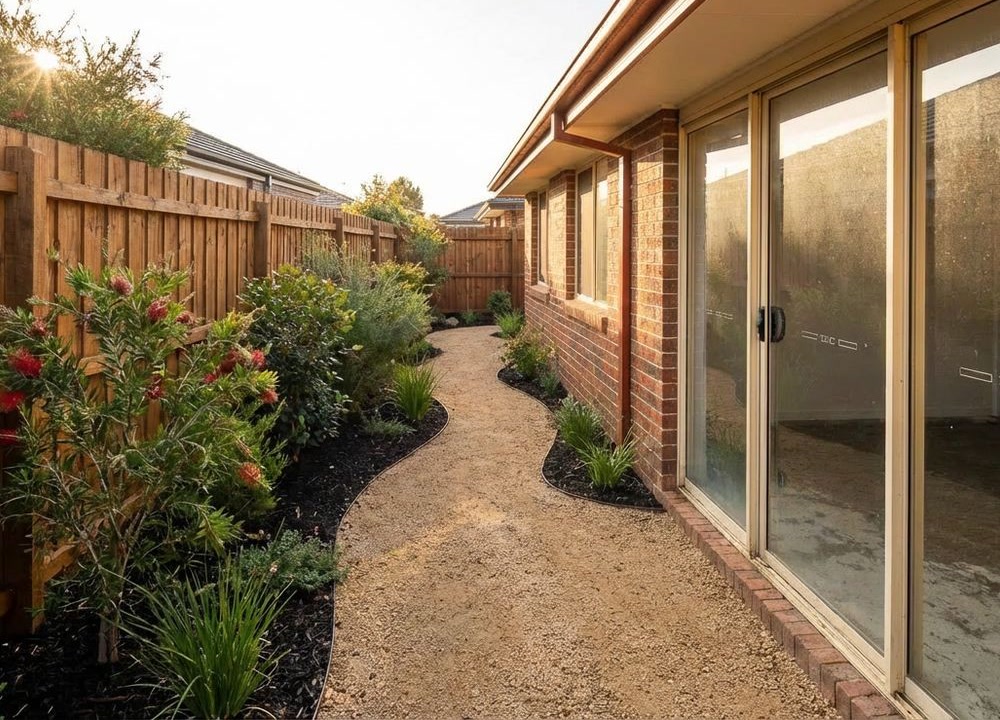
Most side yard ideas fail when homeowners decorate a leftover strip before deciding what job that space actually needs to do. A narrow side yard may be an access route, a drainage corridor, a utility zone, a privacy strip, a storage area, or a compact destination. Each job needs a different layout.
Before you buy stepping stones, gravel, or privacy plants, identify the main side-yard problem first. A five-foot gap between the house and fence has strict limits: the path must stay usable, water must move away from the foundation, utilities must remain reachable, and plants must fit at mature size.
Which Side Yard Problem Are You Solving?
Give your side yard a clear job description before you select materials. Review the following situations to identify the primary challenge in your space:
- The side yard is the main route from the front yard to the backyard: You need a surface that can handle heavy foot traffic, wheelbarrows, and regular circulation without falling apart.
- The path is muddy, slippery, weedy, or unstable underfoot: Your current materials may lack proper base preparation, or you may be trying to grow lawn in deep shade.
- Water sits beside the house after rain: You are dealing with poor grading, missing gutters, or heavy clay soil that traps runoff against the foundation.
- Pool equipment, AC units, meters, bins, or pipes need screening without blocking service access: You have a visual problem that requires a screening solution that still preserves airflow and maintenance clearance.
- A narrow side return needs planting or privacy without becoming overgrown: You are dealing with neighbor views or exposed fences and need plants that fit the actual width at maturity.
- The space is wide enough for a compact patio, dog run, storage zone, or small destination: You have a wider side corner or dead-end return that can function as a usable outdoor room rather than just a pass-through.
- You need the side yard to do two jobs, such as storage plus circulation or drainage plus planting: You have a hybrid space that requires strict spatial discipline to keep the walking line clear.
Best Side Yard Ideas by Situation
Once you know what your side yard needs to accomplish, you can match it to a specific landscape strategy. Each of the following approaches solves a distinct set of problems using proven landscape-design principles.
Stable Access Path
A side yard that serves as the primary circulation route requires a firm, predictable walking line. When homeowners try to save money by throwing loose river rock over a plastic weed barrier, they create a dangerous, shifting surface that feels like walking on marbles. A stable access path prioritizes base preparation, edge discipline, and non-rolling materials to create a route that handles foot traffic, bikes, and heavy garden tools.
- Best for: Front-to-back circulation; moving trash bins, bikes, tools, and wheelbarrows; side yards that are used often.
- Why it works: By removing soft topsoil, laying a compacted aggregate base, and using angular gravel or heavy pavers, you create a stable walking surface. Solid edging keeps the path material from spreading into the planting beds.
- What to avoid: Never use round river rock as a walking surface. Avoid laying stepping stones directly on bare dirt or mulch, as they will inevitably sink, tilt, and become a trip hazard when the soil gets wet.
- What it beats: A stable path easily outperforms a muddy or slippery gravel path, loose mulch, or a struggling patch of shade-starved grass that turns into a slip-and-slide after every rainstorm.
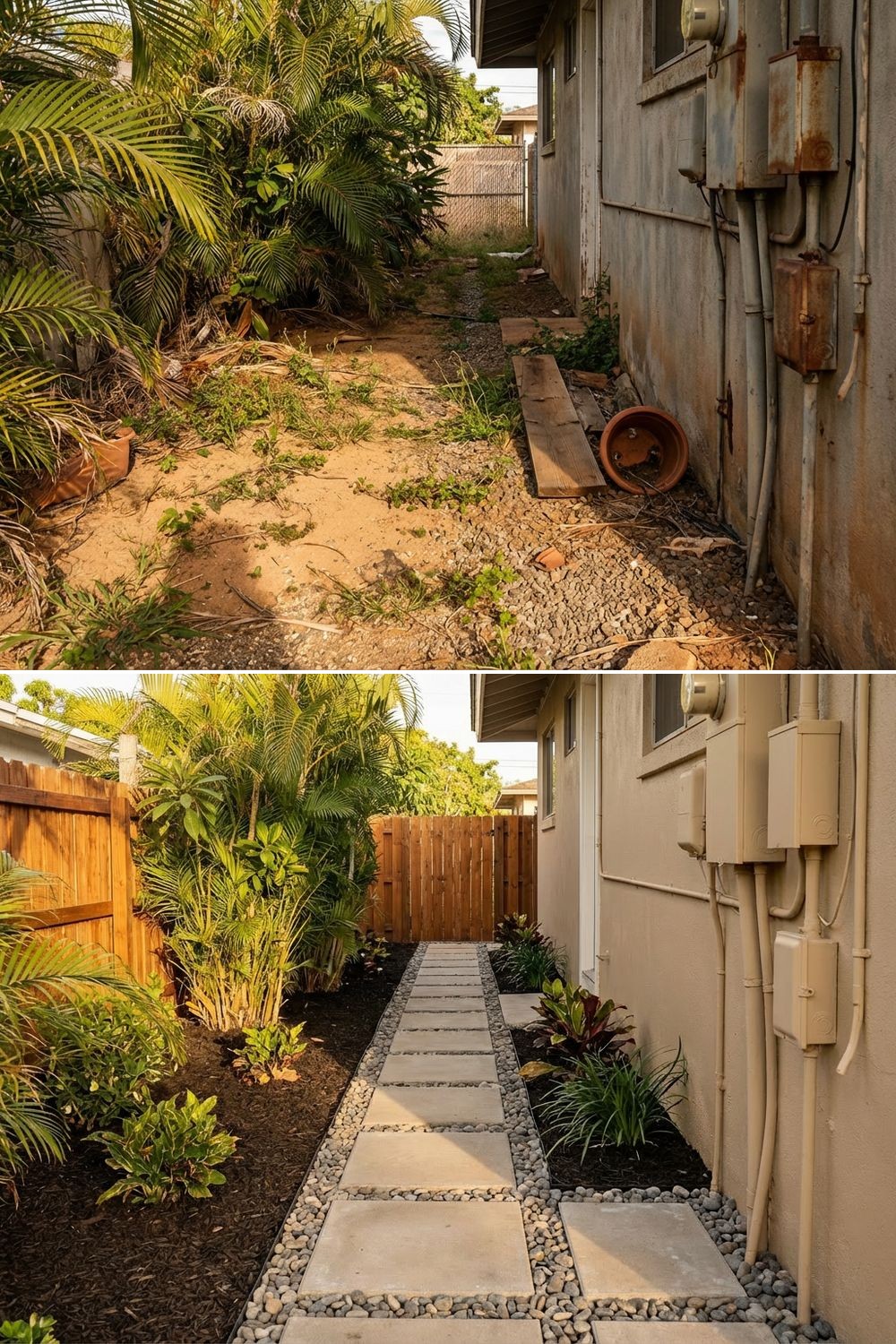
Throwing loose rock over weed barrier creates a shifting, unstable surface. A true access path requires a compacted base and strict edge discipline. Source: The "Slip-n-Slide" Gravel Trap: How to Build a Side Yard Path That Actually Lasts.
Drainage-First Side Yard
In narrow side yards, drainage must be the first decision, not an afterthought. Because side yards are often squeezed between two rooflines or a house and a retaining wall, they act as natural funnels for surface water. If you have standing water and low spots, decorative gravel will not fix the way water moves through the corridor.
- Best for: Muddy corridors; standing water beside the house; managing downspouts, swales, clay soil, or low spots.
- Why it works: This strategy deals with water before surface materials. It captures roof runoff from downspouts, uses subtle grading or swales to move sheet flow away from the foundation, and pairs that drainage with a path surface that can handle occasional rain without turning into mud.
- What to avoid: Do not assume a French drain is the universal fix. French drains manage subsurface groundwater; they choke and fail if used to catch rapid surface runoff from un-guttered roofs. Avoid pouring concrete slabs over clay soil without proper expansion joints and slope.
- What it beats: A drainage-first plan beats a decorative surface that only looks clean for the first week. It protects the foundation, reduces mud at the door, and makes the corridor usable after rain.
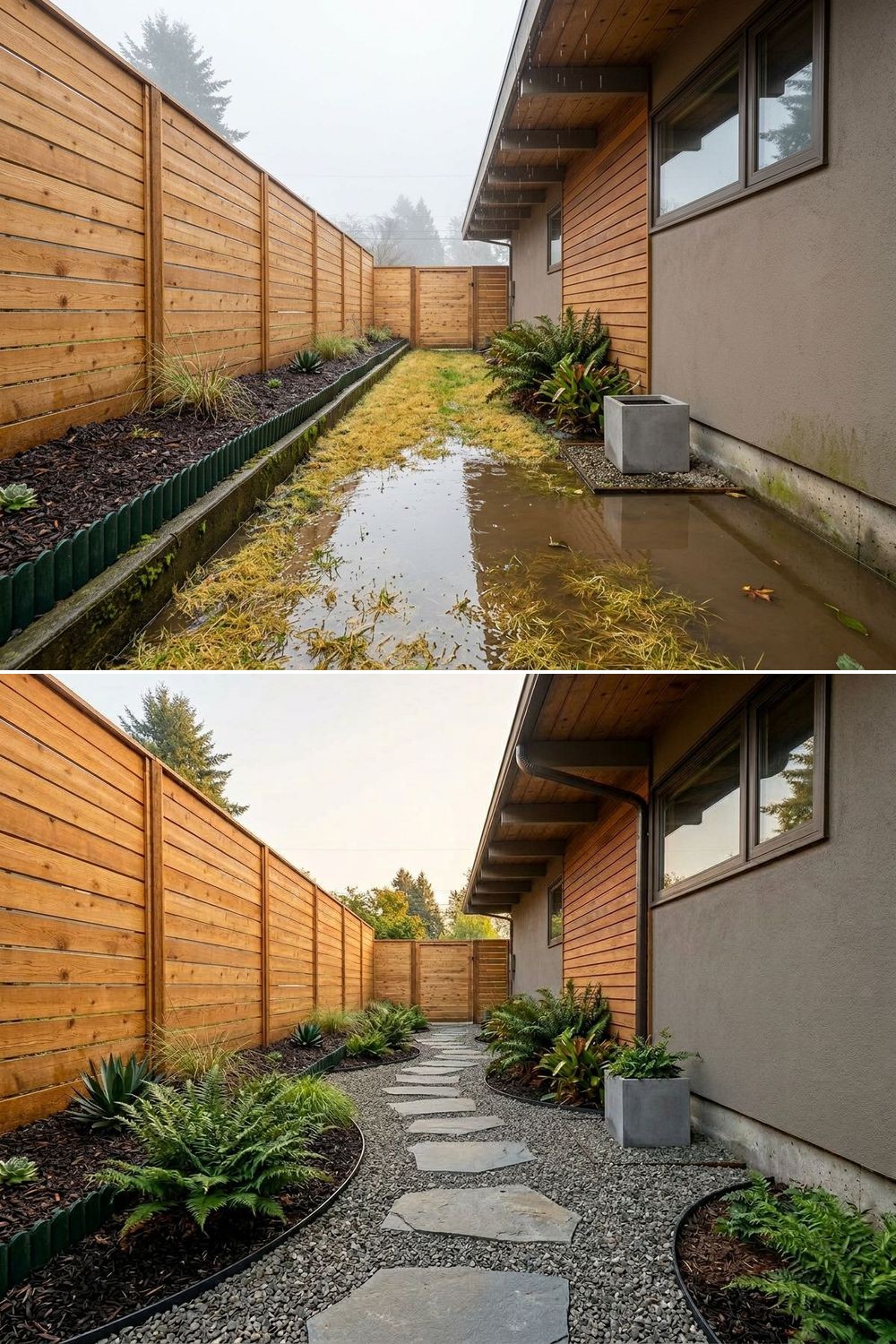
Standing surface water is usually a grading and downspout issue. Subsurface French drains will choke on silt if used to fix roof runoff. Source: Why Your Side Yard Floods (And Why a French Drain Won't Fix It).
Utility Screening with Service Access
Side yards often hold the least attractive but most important parts of the property: AC units, pool pumps, gas meters, electrical conduit, and trash bins. The instinct is to build a solid wooden box around the mess, but that usually creates a maintenance problem. Good utility screening hides equipment from key sightlines while preserving service clearance, airflow, and gate access.
- Best for: Hiding pool equipment; masking AC units, meters, conduit, and pipes; organizing trash bins and awkward service zones.
- Why it works: Slatted screens, offset fencing, and carefully placed upright shrubs break the line of sight without sealing off the equipment. That matters because HVAC units and pool equipment need room to breathe and room for a technician to work.
- What to avoid: Never build a solid, airtight enclosure around an AC condenser or pool heater. Do not plant aggressive, thorny shrubs right in front of the electrical meter, and never block the swing radius of a gate or the access panel of a pump.
- What it beats: Smart utility screening beats a solid box that blocks service access, and it is much better than leaving pumps, pipes, and bins fully exposed from the patio or driveway.
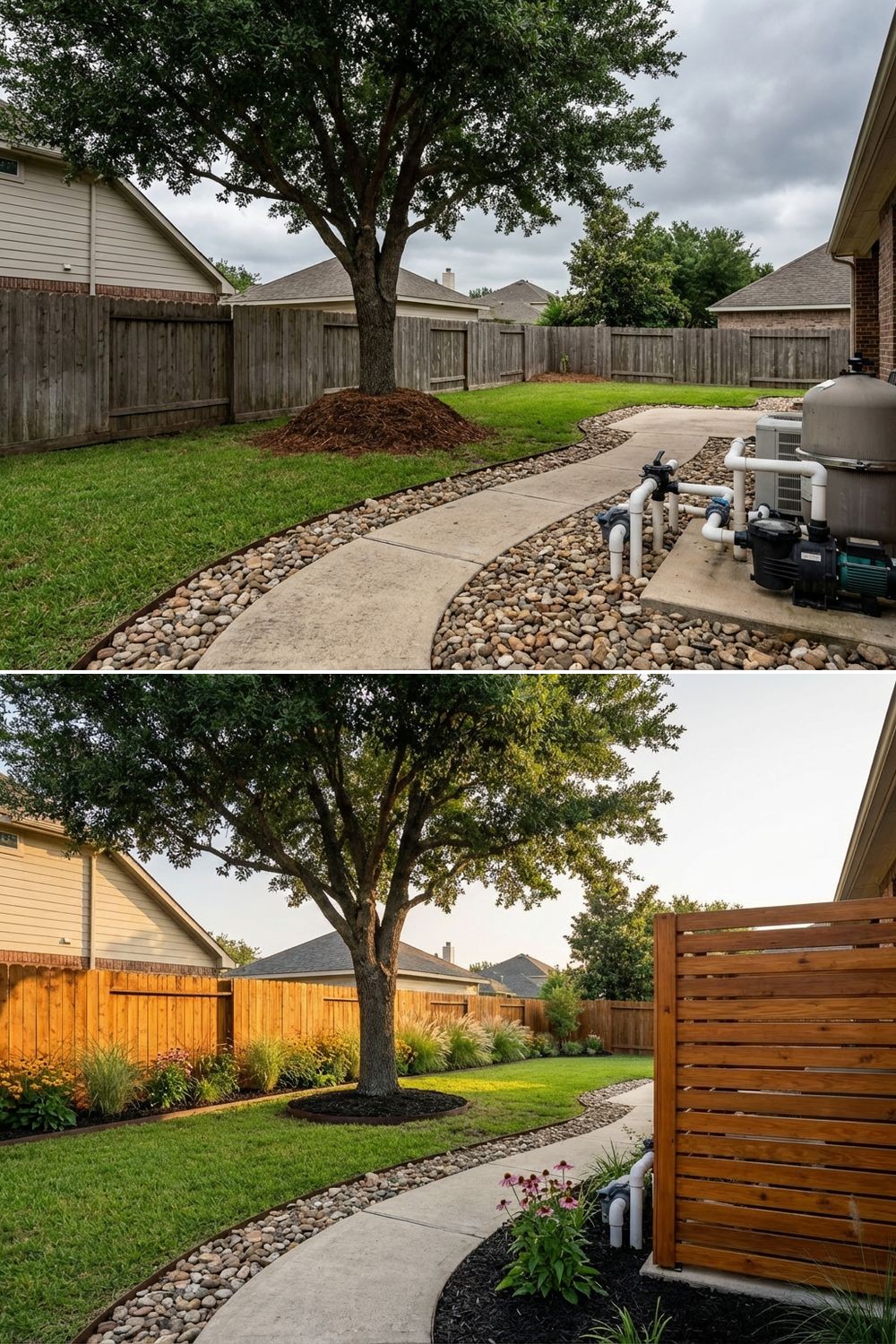
Screening pool pumps and AC units requires slatted designs that break the visual line of sight while preserving essential mechanical airflow. Source: Hiding Pool Equipment and Handling Lake Winds: A Side Yard Strategy.
Narrow Planting and Privacy Strip
When a second-story addition goes up next door, or when a side return has an ugly chain-link fence, the immediate reaction is to plant a massive hedge. That is usually the wrong move in a tight strip. A narrow planting strategy starts with mature width, root room, light, and access, then chooses plants with a slim, upright habit.
- Best for: Side returns with ugly fences or exposed pipes; blocking neighbor views from a tight setback; narrow planting beds where ordinary shrubs get too wide.
- Why it works: Slim columnar evergreens, espaliered trees, and vertical trellis vines can add height without the side-to-side bulk that swallows the walkway. The goal is not just privacy; it is privacy that still leaves room to walk, maintain the fence, and keep air moving along the house.
- What to avoid: Do not plant standard broadleaf trees or aggressive spreading hedges (like Leyland Cypress) in a narrow strip. Within five years, they will crush the fence, scrape the siding, and completely block the access route.
- What it beats: Purposeful narrow planting beats an overgrown hedge that needs hard pruning every few months just to keep the meter, gate, or walkway reachable.
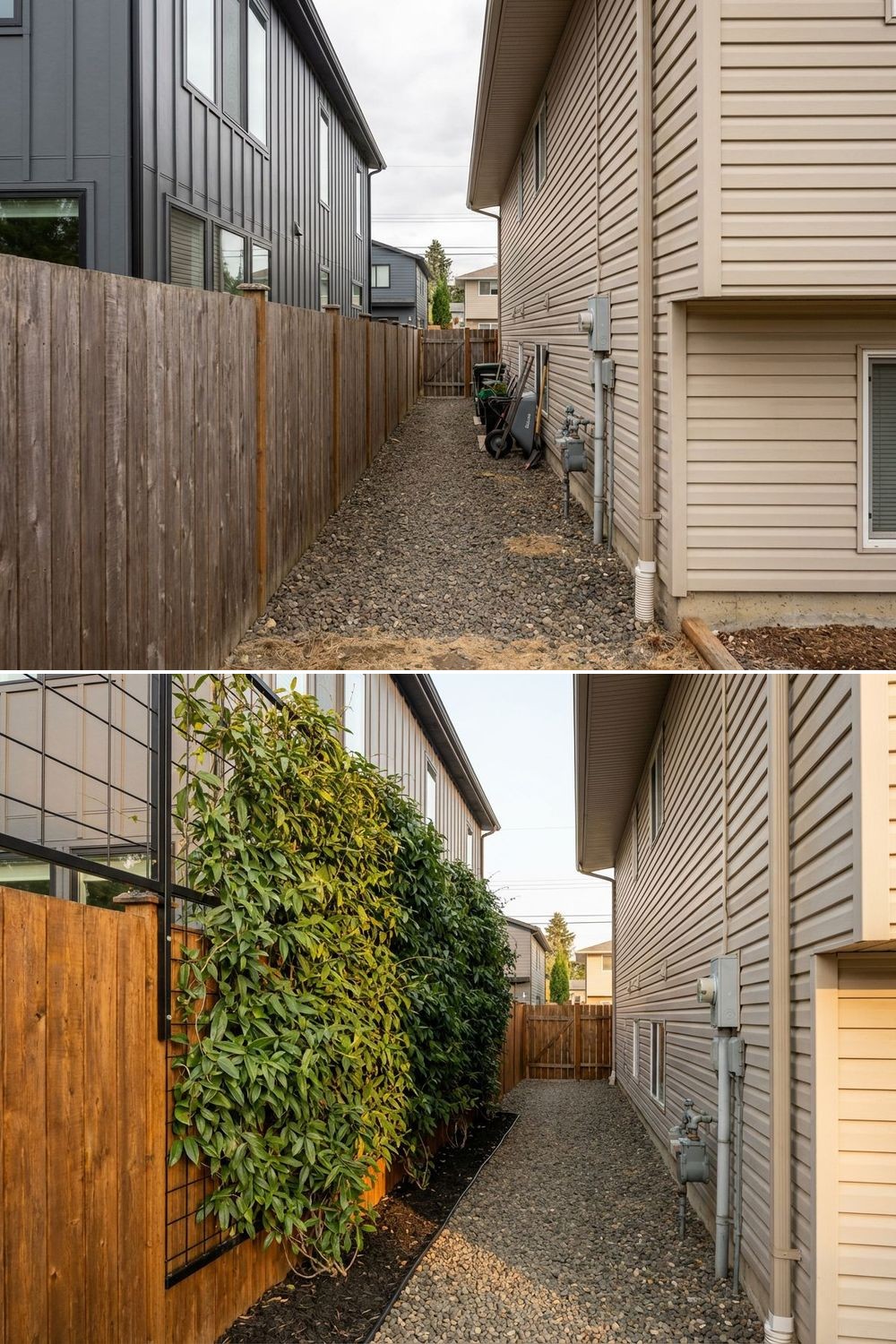
Forcing standard trees into a narrow setback damages the fence and the foundation. Privacy in tight spaces requires plants with a strictly columnar habit. Source: Why Planting Trees in a Narrow Side Yard is a Mistake (And What to Do Instead).
Compact Side-Yard Patio or Destination
Not every side yard needs to be a pass-through. If a side return is a dead end, or if the side yard is unusually wide, forcing a narrow walkway through the entire length can waste useful square footage. A compact destination can turn an awkward corner into a small outdoor room.
- Best for: Wider side corners; dead-end side returns; small seating areas, potting benches, dog zones, or quiet garden retreats.
- Why it works: Treating the space as a destination changes the paving logic. Instead of a narrow ribbon of concrete, you can use a wider patio surface, a small bench, a potting table, or a quiet dog zone. Shade that makes lawn struggle can become an asset for a cooler seating area.
- What to avoid: Do not pave right up to the trunk of an existing tree, and do not ignore property line setbacks. Avoid placing a seating area directly next to a noisy AC condenser unless there is enough distance or screening to make it comfortable.
- What it beats: A side-yard destination beats a leftover corridor of dead grass and weeds. It reclaims lost square footage and adds genuine living space to the property.
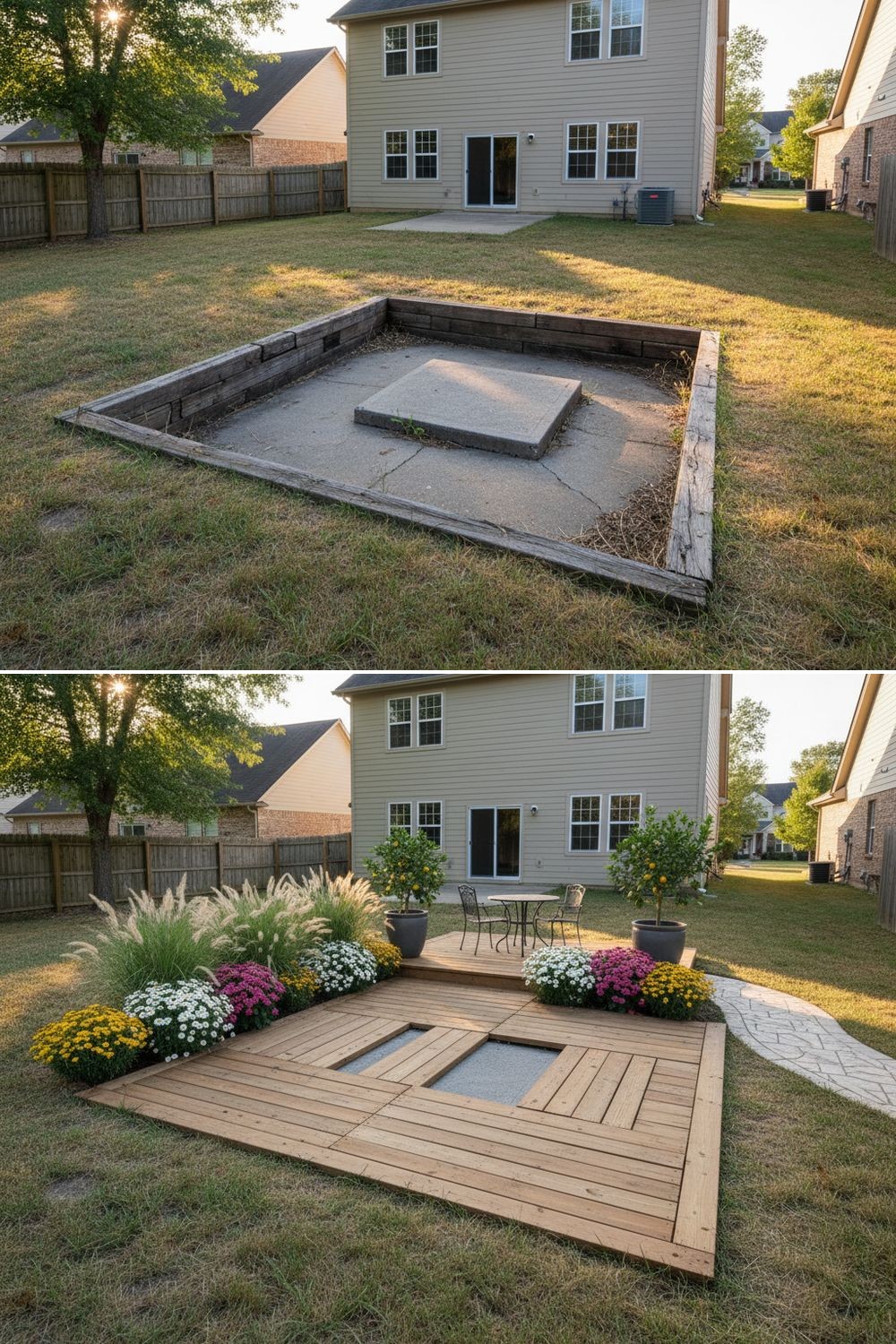
When a side return is a dead end or slightly wider, paving it as a compact patio creates a usable destination rather than a wasted corridor. Source: How We Hid an Ugly Stormwater Drain and Gained a Usable Corner Patio.
Storage and Circulation Hybrid
Many homes have no better service area, so the side yard has to handle storage and circulation at the same time. When those two jobs are not separated, the space becomes an obstacle course of hoses, leaning bikes, and overflowing trash bins. A hybrid strategy gives each job a defined place.
- Best for: Storing bins, hoses, bikes, tools, and garden supplies; side yards that must remain functional; homes with no better service area.
- Why it works: This strategy keeps one clear walking line and pushes storage into defined hardscape pockets. A wall-mounted hose reel, recessed bin pad, narrow shed, or vertical bike rack can keep the floor clear without pretending the side yard is larger than it is.
- What to avoid: Do not attempt to use the entire width of the side yard for walking if you also need storage. Avoid "hidden" storage solutions that ignore the reality of door swings, lid heights, or the physical space needed to maneuver a heavy trash bin.
- What it beats: A planned storage and circulation hybrid beats the daily frustration of tripping over hoses and dragging heavy bins through loose gravel and mud.
What Usually Goes Wrong
Side yards are unforgiving because they are narrow, shaded, and heavily used. Small mistakes in material choice or grading show up quickly. Before you finalize your side yard ideas, make sure you are not falling into these common traps:
- Buried weep holes or high grades against the house: Layers of weed fabric, gravel, soil, or raised beds against the foundation can block brick weep holes and trap moisture in the wall cavity. That is a house problem, not just a landscape problem.
- The "Gravel to Grass" trap in heavy shade: Attempting to replace a functional gravel service path with a lush lawn usually fails. Turf grasses require hours of direct sunlight. In a narrow side yard shadowed by fences and eaves, grass quickly thins out, leaving a permanent mud pit.
- Encasing utilities in concrete: Pouring a permanent concrete slab directly over buried electrical conduit, plumbing cleanouts, or gas lines can make future repairs expensive. If a utility ever needs work, the hardscape may have to be broken open.
- Ignoring downspout runoff: Treating standing surface water with a subsurface French drain often misses the real source. If roof water is dumping into the side yard, capture and move that water before trying to dry out the soil.
- Planting for privacy while ignoring mature width: Buying a fast-growing screening tree to block a neighbor's window seems smart until that tree reaches a fifteen-foot width in a five-foot gap. The roots will heave the pathway, and the canopy will physically push against the house siding.
- Failing to provide a stable material base: Laying pavers directly on native clay soil or dumping loose river rock over plastic weed barrier creates a path that sinks, shifts, and spreads. The base and edge restraint matter more than the surface material.
Once You Know Your Side Yard Strategy, Test It on Your Actual Space
Designing a side yard is an exercise in prioritization. You cannot have a sprawling privacy hedge, a wide patio, and a clear access path all competing for the same five-foot strip of land.
The key is committing to the primary function first. Decide if the biggest problem is muddy access, standing water beside the foundation, exposed pool equipment, overgrown planting, or the lack of organized storage. Once you know whether your side yard needs drainage, access, screening, storage, or a compact destination, test that direction on your actual space before you buy materials or plants.