Small Backyard Ideas
When a backyard is short on square footage, homeowners often try to solve the problem with decor—adding string lights, throw pillows, and potted plants. But a successful small space isn't about decoration; it is entirely about layout, scale, and spatial geometry. A compact yard forces you to be ruthless with your priorities. Every square foot must be accounted for, and every structural decision—from patio placement to fence color—will dictate whether the space feels like a cramped outdoor closet or a deliberate, comfortable retreat.
When a backyard is short on square footage, homeowners often try to solve the problem with decor—adding string lights, throw pillows, and potted plants. But a successful small space isn't about decoration; it is entirely about layout, scale, and spatial geometry. A compact yard forces you to be ruthless with your priorities. Every square foot must be accounted for, and every structural decision—from patio placement to fence color—will dictate whether the space feels like a cramped outdoor closet or a deliberate, comfortable retreat.
Before you buy furniture or start digging, you need to understand the structural realities of your space.
Diagnosing Your Small Backyard Shape
Generic inspiration photos rarely apply to the specific constraints of a small yard. The first step is diagnosing your actual spatial geometry, as the shape of your property dictates where your primary focal point and patio must go.
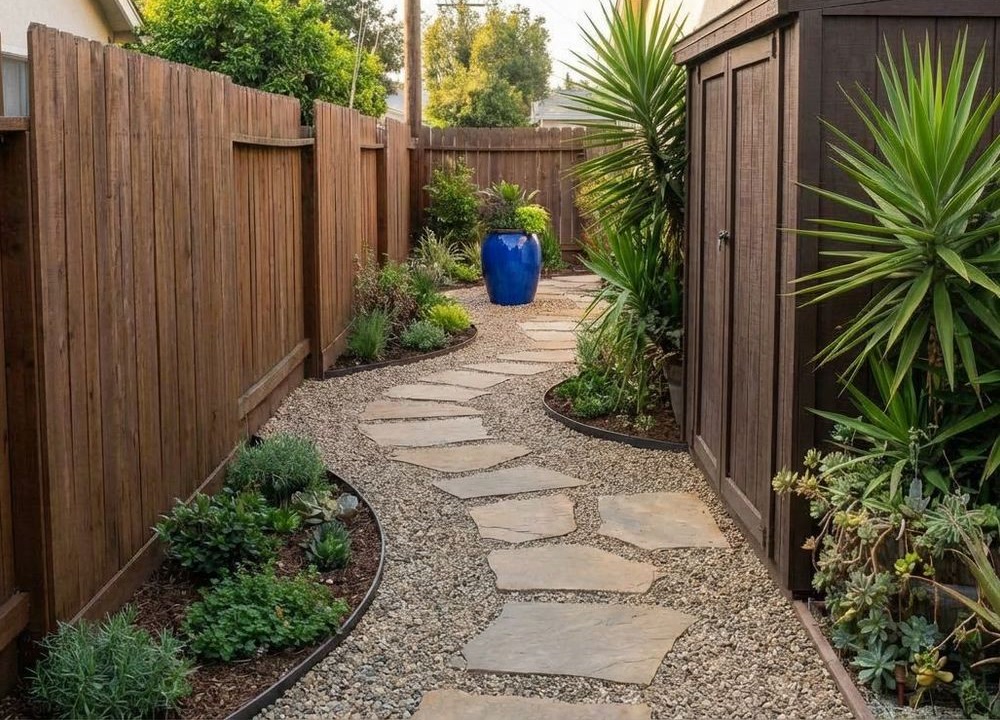
- The Narrow 'Dog Run' or Deep Rectangle: Common in townhomes and dense suburbs, this shape acts like a bowling alley. If you push everything to the edges, you emphasize the narrowness. As seen in many narrow-yard transformations, the solution is to break up the sightlines by placing a patio or deep planting bed partway down the yard to stop the eye from rushing straight to the back fence.
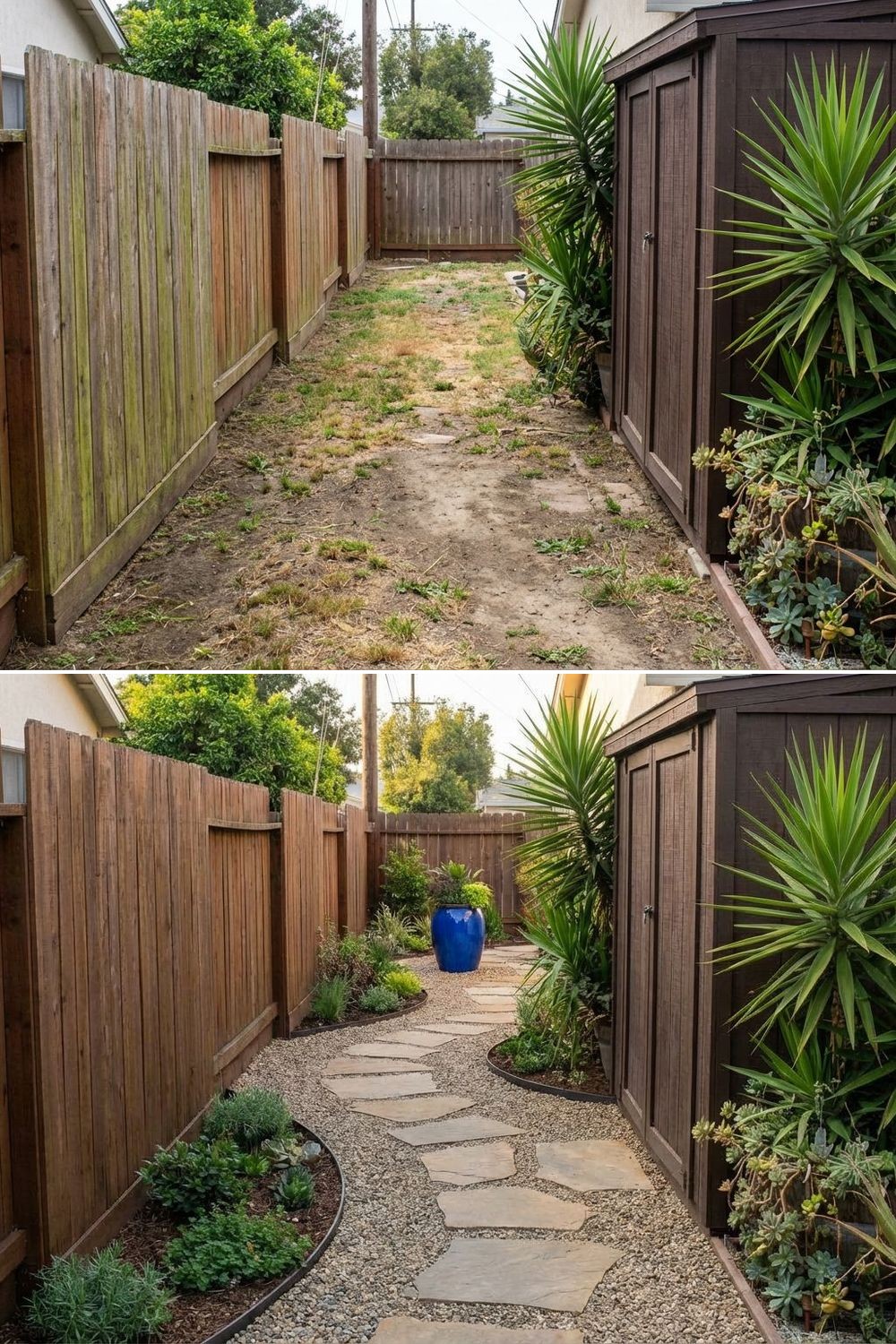
In narrow 'bowling alley' yards, pushing plants to the perimeter only emphasizes the tight corridor. Breaking up the center path stops the eye and makes the space feel wider. Source: How to Fix the "Bowling Alley" Backyard: Design Ideas for Narrow Strips.
- The Shallow, Wide Yard: This shape hugs the back of the house, offering width but no depth. Here, the layout must flow laterally. Patios are best placed off to one side rather than dead center, allowing the remaining width to be used for layered planting that creates an illusion of depth.
- The Enclosed Urban Courtyard: Walled gardens or heavily fenced city lots often feel claustrophobic. In these spaces, horizontal square footage is maxed out, meaning you must utilize vertical space and sightlines, drawing the eye upward with tall, narrow trees or climbing vines.
The One-Zone vs. Multi-Zone Decision
One of the most common ways to ruin a small backyard is falling into the "estate list in a courtyard" trap—trying to replicate a sprawling suburban property on a micro-scale. Attempting to cram a dining table, a fire pit, a lounging sectional, and an outdoor kitchen into a compact footprint guarantees a cluttered, unusable yard.
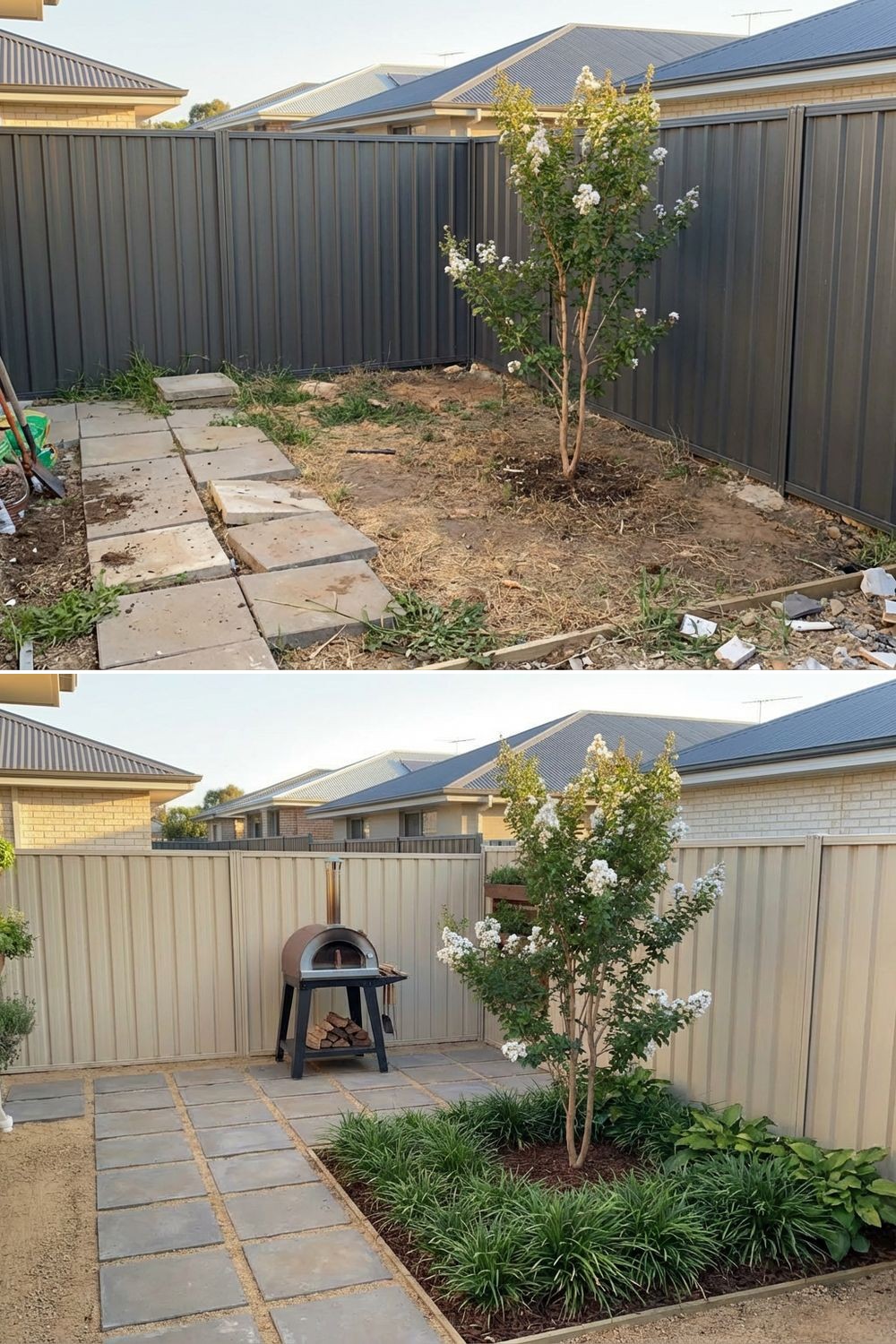
Avoid the 'estate list in a courtyard' trap. In a compact footprint, prioritizing one primary function yields a much more usable space than cramming in multiple tiny zones. Source: Small Yard, Big Dreams: How to Reclaim Dead Space and Fit It All In.
In small spaces, you must choose one primary function based on your actual lifestyle habits. If you host dinners, prioritize a proper dining setup and skip the bulky lounge chairs. If you prefer morning coffee and evening wine, build a comfortable lounge area and eat indoors.
If you absolutely must have multiple functions, use flexible, dual-purpose zones. A fire pit can double as a coffee table when covered. Instead of movable freestanding furniture that eats up valuable floor space, consider built-in perimeter seating (like a masonry bench along a retaining wall) to maximize the open center of the yard.
The Small Lawn Dilemma: Keep, Shrink, or Replace?
For many homeowners, the default assumption is that a backyard must have grass. But keeping a tiny lawn is often a mistake, especially in enclosed spaces where shade and poor airflow lead to the "pocket lawn fallacy"—a muddy patch that refuses to grow. A 10-by-10-foot patch of struggling turf requires the same lawnmower, edging, and watering infrastructure as a large yard, but offers very little functional payoff.
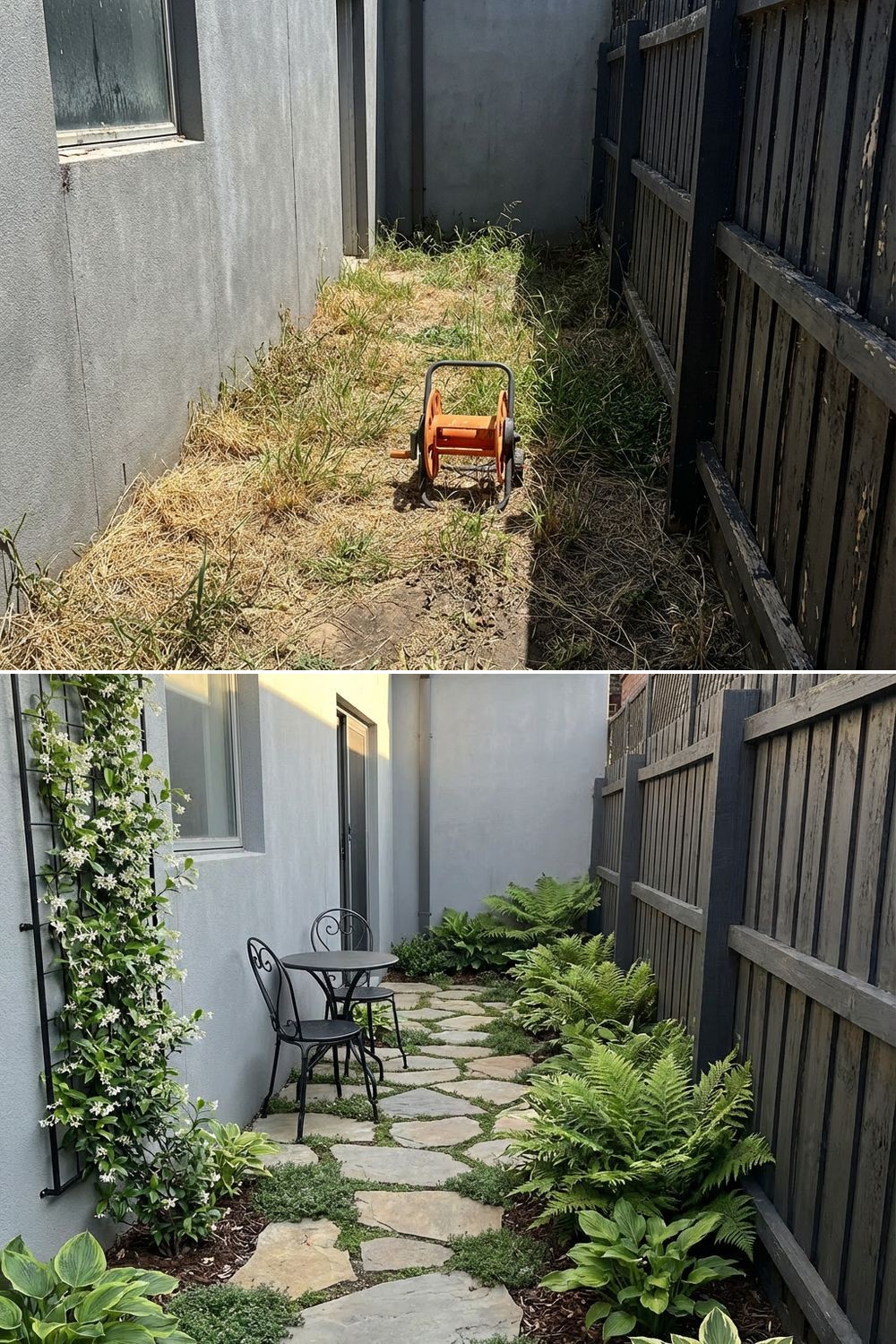
The 'pocket lawn fallacy': turf trapped in small, shaded courtyards often turns to mud. Replacing it with intentional hardscape creates a cleaner, low-maintenance outdoor room. Source: The "Pocket Lawn" Trap: Why Grass Fails in Small Courtyards (And What to Build Instead).
When comparing a tiny lawn to replacing it with full hardscape or groundcover, the hardscape often wins in compact spaces. Removing the lawn entirely can actually make a small yard feel larger and more intentional. By replacing patchy grass with oversized pavers, decking, gravel, or creeping groundcovers (like thyme or dwarf mondo grass), you create a cohesive, low-maintenance courtyard. If you must have a soft surface for pets or children, commit to a high-quality artificial turf or a dedicated, clearly bordered micro-lawn that acts as a deliberate design element rather than default filler.
Softening Boundaries and Beating the 'Wooden Box' Effect
When your property lines are tight, a standard six-foot timber fence can dominate your peripheral vision, creating a claustrophobic 'wooden box' effect.
Homeowners often try to save space by pushing narrow perimeter planting beds right up against the fence in a thin line. This actually highlights the boundary and emphasizes the small footprint. Instead, use deep, layered corner beds. By bringing the planting beds further into the yard at the corners, you blur the hard right angles of the property line.
To make the boundaries recede visually, consider painting solid privacy fences a dark color, like black or charcoal. Dark colors absorb light and cause the fence to visually drop away, allowing the green foliage in front of it to pop. Combine this with vertical layers—climbing vines, espaliered shrubs, or small ornamental trees—to soften the hard edges. Where privacy allows, swapping solid fences for slatted or planted screening can also let light and air flow through, making the yard feel less confined.
Circulation, Scale, and Surface Choices
How you move through the space is just as important as what you put in it. Circulation paths and negative space are critical; without them, a yard feels like a storage unit. Always leave enough clearance around furniture—the standard rule is at least 3 feet of walking space around tables and fire pits.
When choosing surface materials, scale matters. Tiny, busy paver patterns or small bricks can make a compact yard feel chaotic. Oversized pavers (like 24x24 inch slabs) trick the eye into perceiving the space as larger.
However, altering your hardscape-to-softscape ratio requires careful planning. Increasing the amount of pavement in a small footprint dramatically changes the micro-climates in your yard. More hardscape means you must actively manage poor drainage, as water has fewer places to absorb. It also traps heat, which can bake adjacent plants. Ensure your surface choices account for proper grading, permeable joints, or integrated channel drains.
Common Small Backyard Design Mistakes
Before spending your budget, be aware of the common failure modes that plague small yards:
- Buying bulky outdoor furniture: Massive, deep-seated sectional sofas will eat your entire patio. Opt for visually lightweight furniture with exposed legs to let the eye travel under and through the pieces.
- The 'Waiting Room' layout: Pushing all your furniture against the perimeter walls to "save space" leaves a sterile, empty dance floor in the middle. Instead, pull seating inward to create a cozy, deliberate gathering zone.
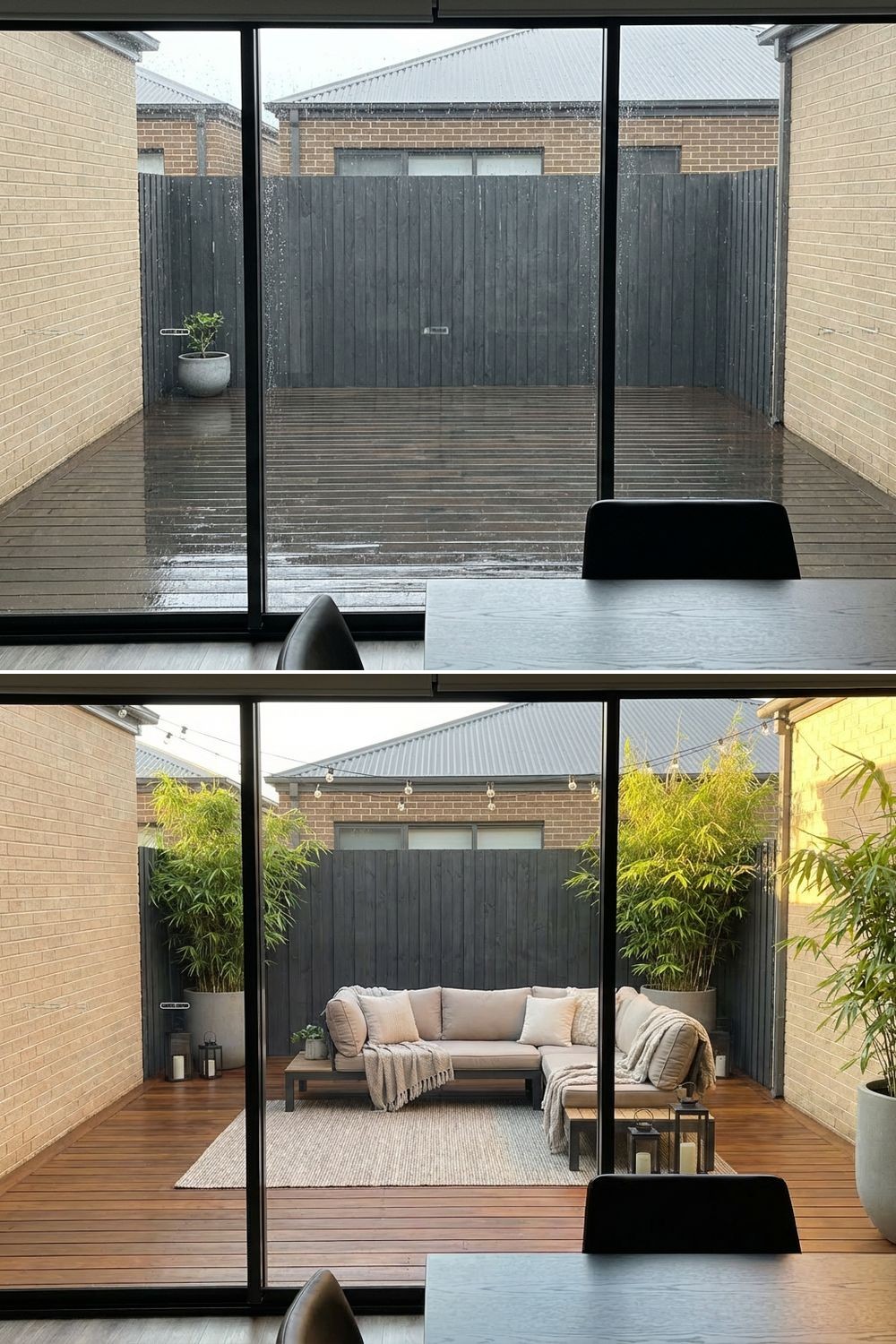
Pushing furniture against the walls to 'save space' creates a sterile waiting-room effect. Pulling seating inward defines the space and makes it feel deliberate. Source: The "Waiting Room" Effect: How to Fix a Sterile Box Backyard.
- Ignoring shade patterns: Small, fenced-in yards often suffer from deep shade cast by the house or boundary walls. Planting sun-loving plants in these shadowed micro-climates guarantees failure. Always map your sunlight before buying plants.
- Lack of a focal point: Without a clear focal point—like a water feature, a specimen tree, or a well-placed fire bowl—the eye wanders aimlessly, resulting in a cluttered, messy look. Give the yard a distinct visual anchor.
Testing Your Small Backyard Layout
Theoretical layout rules are helpful, but visualizing scale is mandatory before pouring concrete, building a deck, or buying non-returnable furniture. Because the margins for error in a small yard are so tight, placing a patio even two feet in the wrong direction can ruin the circulation of the entire space.
Once you know which layout direction fits your lifestyle—whether that means committing to a fully hardscaped courtyard, painting your fences black, or choosing a single-zone lounge area—you should verify those decisions visually. Before you rip up your struggling lawn or commit to a hardscape plan, test small backyard ideas on your yard photo to ensure the scale, circulation, and surface choices actually work for your specific property.
For a broader makeover, you can also upload a photo to redesign your backyard and compare patio, privacy, planting, lawn, and seating directions together.