Brick House Curb Appeal: Exterior Updates That Actually Work
Owning a brick home means owning a facade with permanence, texture, and undeniable visual weight. However, when a brick exterior starts to feel dated, flat, or imposing, homeowners often panic. The instinct is to grab a bucket of masonry paint to cover it all up, applying a trendy, irreversible fix to a problem that usually has nothing to do with the brick itself.
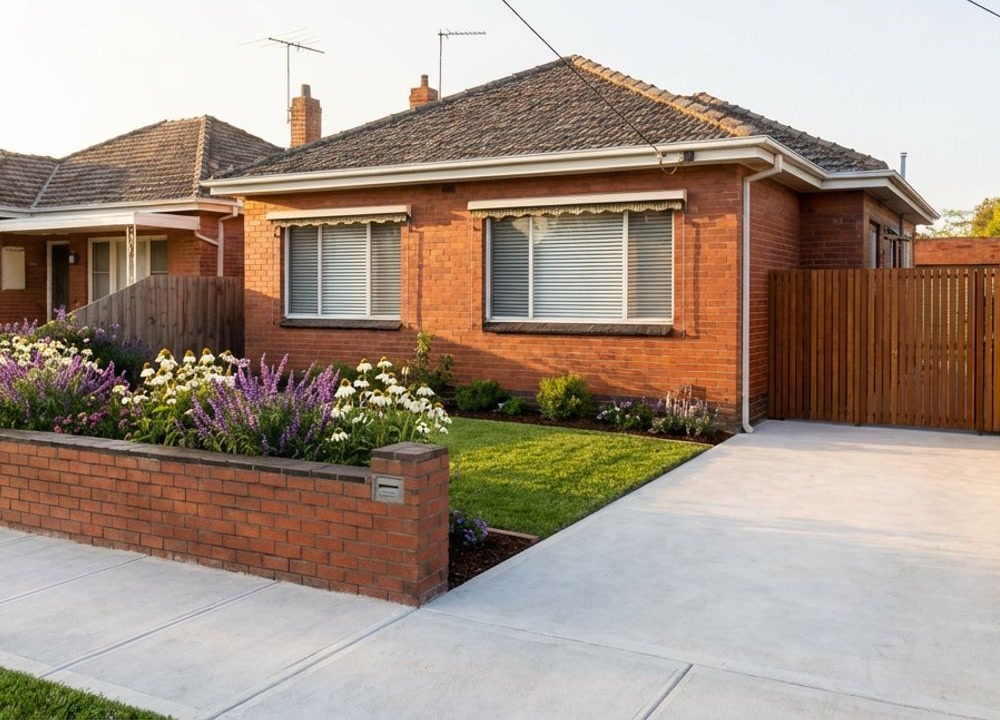
Owning a brick home means owning a facade with permanence, texture, and undeniable visual weight. However, when a brick exterior starts to feel dated, flat, or imposing, homeowners often panic. The instinct is to grab a bucket of masonry paint to cover it all up, applying a trendy, irreversible fix to a problem that usually has nothing to do with the brick itself.
Improving brick house curb appeal requires a diagnostic approach. Before you alter the masonry, you need to understand how the surrounding elements—trim colors, foundation planting, hardscaping, and entryway scale—are interacting with your home's structural grid. By balancing undertones, deepening landscape beds, and fixing architectural proportions, you can modernize a brick exterior while preserving its low-maintenance durability.
1. Diagnosing Your Brick House Curb Appeal
Before you can fix a tired exterior, you need to identify why it feels uninviting. Homeowners frequently blame the brick when the real culprit is a lack of contrast, overgrown landscaping, or a hidden front door.
Identify the Dominant Undertones
Brick is rarely just one color. It is a composite of clay, sand, and firing temperatures that produce specific undertones. To choose complementary colors, you must identify whether your brick leans red, orange, yellow, brown, or pink. Stand back from your house and squint, or take a photo and blur it. If you have 1970s blonde brick, the undertone is likely yellow or pink. If you have classic colonial brick, it is red or deep orange. Fighting these undertones with clashing paint or roof colors will always make the house look disjointed.
The "Contrast Collapse"
Often, a house looks dated because the trim color has dragged the brick down. This is common with 1970s brown brick paired with dark brown trim, or 1990s beige brick paired with beige trim. When there is no visual separation between the masonry and the architectural details, the facade suffers from contrast collapse, turning into one heavy, monolithic block.
Assessing Visual Weight
Brick is visually heavy. It grounds a house to the earth. If your landscaping consists of a two-foot-wide strip of dirt and a few tiny shrubs, the house will look top-heavy, as if it is crushing the yard. A heavy house requires a substantial, layered base of planting to visually anchor it.
2. Choosing Trim and Accent Colors for Brick
Changing your trim, fascia, and shutter colors is the single most effective way to update a brick house without touching the masonry.
The Stark White and Dark Brown Traps
Many homeowners try to modernize red brick by painting the trim stark, bright white. While this works on historic Georgian colonials, on mid-century ranches or 1980s builds, stark white can look harsh and clinical against variegated brick. Conversely, dark brown trim on warm brick pulls out the muddiest, dullest tones, suffocating the architecture.
Tonal and Earth-Tone Palettes
Instead of stark white, look toward tonal, earth-inspired palettes.
- For Red Brick: Warm creams, soft taupes, and muted sage greens provide a sophisticated contrast that modernizes the red without fighting it.
- For Brown/Blonde Brick: Charcoal grays, deep bronze, or creamy off-whites lift the heavy brown tones and provide desperately needed crispness.
- For Beige/Pink Brick: Warm greiges and muted olive tones ground the lighter brick and keep it from looking washed out.
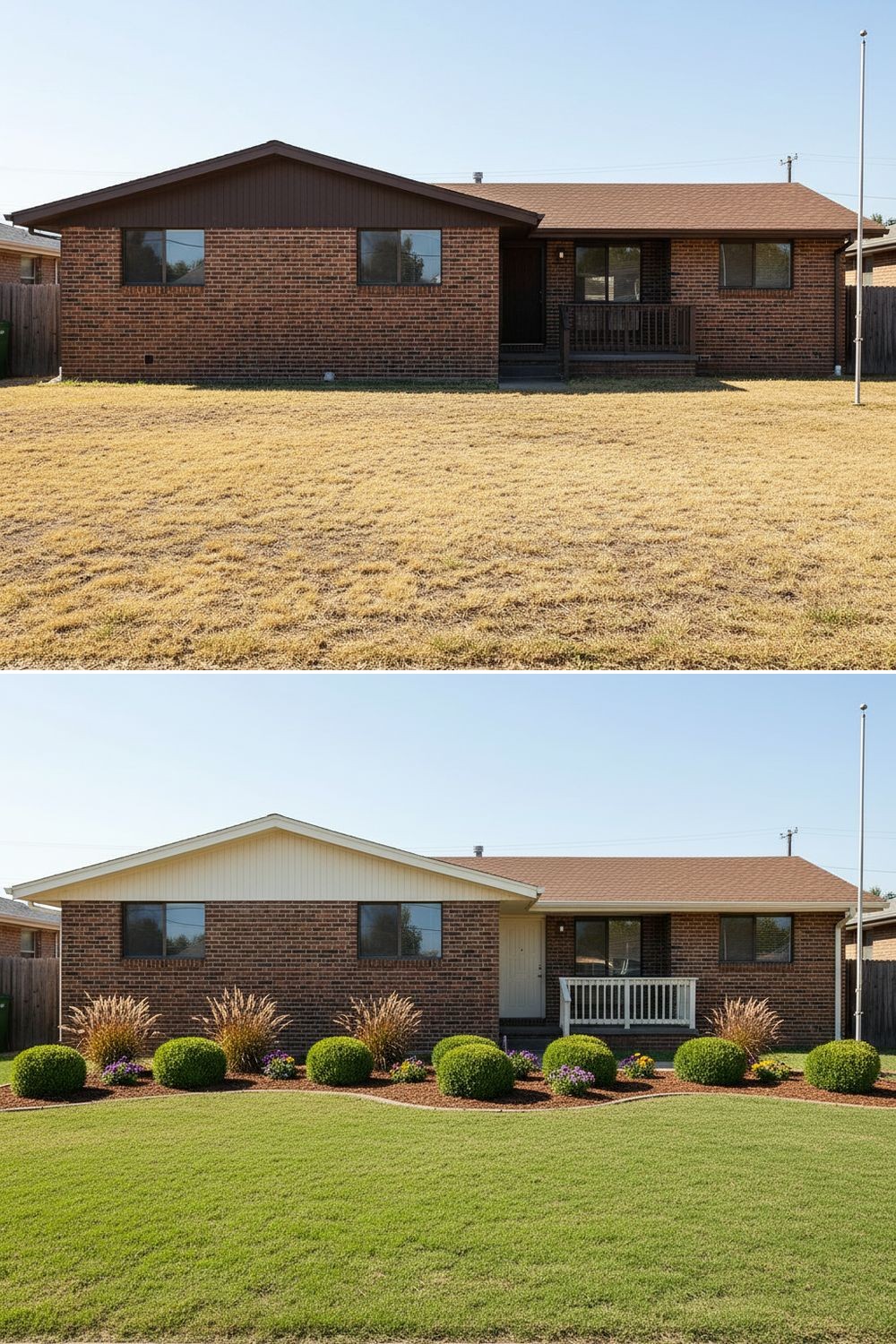
Dark brown trim on brown brick causes 'contrast collapse.' Updating to a lighter, tonal trim provides the crispness the facade needs. Source: That ‘Ugly’ 70s Brown Brick Isn’t the Problem (Your Trim Is).
The Front Door Anchor
A massive brick facade can easily swallow a recessed entryway. Your front door needs to act as a calm visual anchor. Avoid ornate, leaded glass doors with excessive brass caming; they add visual noise that competes with the busy texture of the mortar and brick. Instead, opt for solid colors that pop against the brick's undertone, or use rich, natural wood stains to bring warmth to the entry sequence.
3. Softening the Facade: Landscaping for Brick Homes
Brick is rigid, grid-like, and unyielding. The role of landscape architecture here is to provide relief and contrast through loose, organic forms.
The Failure of the "Meatball" Shrub
The most common landscaping mistake on brick homes is the "foundation necklace"—a single row of tightly clipped, meatball-shaped evergreen shrubs pushed right up against the foundation. This approach highlights the rigid geometry of the house rather than softening it. It also traps moisture against the brick and makes the home look institutional.
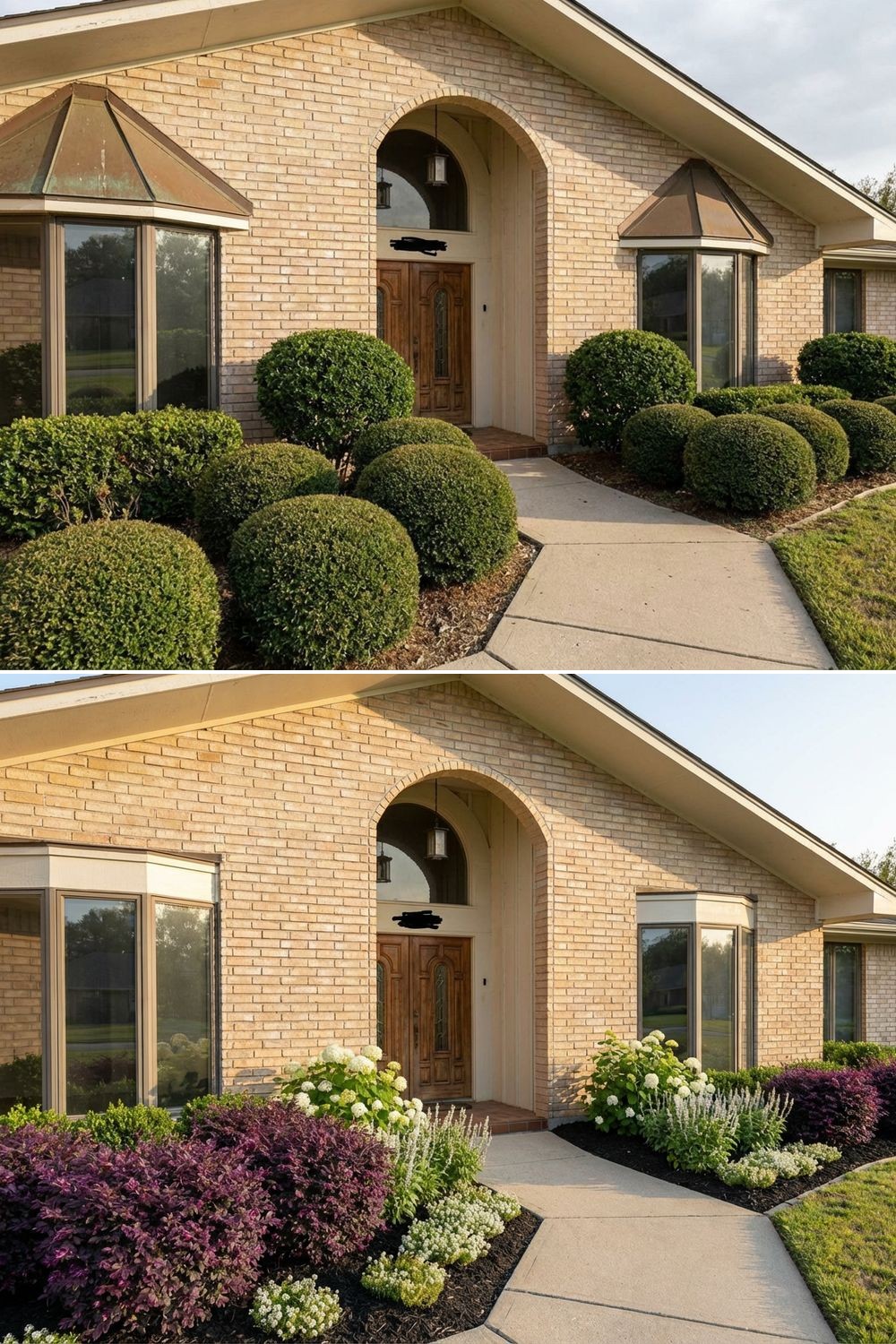
A single row of tightly clipped shrubs highlights the rigid geometry of a brick house rather than softening it. Source: Hate Your Beige Brick? Don't Paint It—Fix the "Meatball" Shrubs Instead.
Creating Planting Depth
To balance the visual weight of a brick house, you must pull the garden beds out. A foundation bed should be a minimum of 6 to 8 feet deep. This allows you to layer plants: low groundcovers in the front, mid-sized perennials and ornamental grasses in the middle, and looser, natural-form evergreens in the back.
Organic Shapes and Foliage Colors
Contrast the straight lines of the masonry with plants that move in the breeze. Ornamental grasses, sweeping hydrangeas, and weeping Japanese maples break up the flat planes of the walls. When selecting plants, consider the brick's undertone. Deep green and silver foliage pop beautifully against red brick, while chartreuse and burgundy leaves create striking contrast against beige or blonde brick.
4. Updating the Entryway and Porch
The entryway is the welcoming sequence of your home, but structural elements here often fail to match the scale of the brick.
Upgrading Undersized Columns
A common flaw in builder-grade brick homes is the use of spindly, 4x4 wooden posts or skinny metal scrollwork columns to support the front porch. These undersized elements look structurally inadequate next to heavy masonry. Wrapping these posts in substantial, 8x8 or 10x10 cedar or painted wood columns immediately corrects the scale and adds architectural integrity.
Exterior Lighting Scale
Tiny, brass carriage lights get lost on a large brick wall. Exterior lighting should be sized appropriately—typically one-quarter to one-third the height of the front door if using a single fixture, or one-quarter the height if using two. Swapping dated fixtures for larger, matte black or dark bronze lanterns modernizes the facade instantly.
Using Natural Wood Accents
Brick pairs beautifully with natural wood. Wood ceilings on the porch, heavy timber columns, or a mahogany front door introduce a warm, organic texture that breaks up the cold, fired-clay surface of the home.
5. Hardscape Harmony: Walkways and Driveways
Your driveway and front walkway take up a massive amount of visual real estate. If they clash with the house, the entire property feels chaotic.
Avoid Matching Masonry
A frequent mistake is trying to install a stamped concrete or paver walkway that mimics the color and texture of the house brick. It almost never matches perfectly, resulting in a "near-miss" that looks like a mistake. Instead, use contrasting but complementary materials. If the house is warm red brick, a cool-toned bluestone, slate, or clean brushed concrete walkway provides elegant, intentional contrast.
Breaking Up the Concrete Monolith
If your home is dominated by a massive concrete or asphalt driveway, the house itself can feel like an afterthought. You can break up this "concrete runway" by bordering the driveway with cobblestones or brick ribbons (which tie back to the house). Widening the adjacent planting beds also helps swallow the hard edges of the driveway, shifting the eye away from the pavement and toward the entryway.
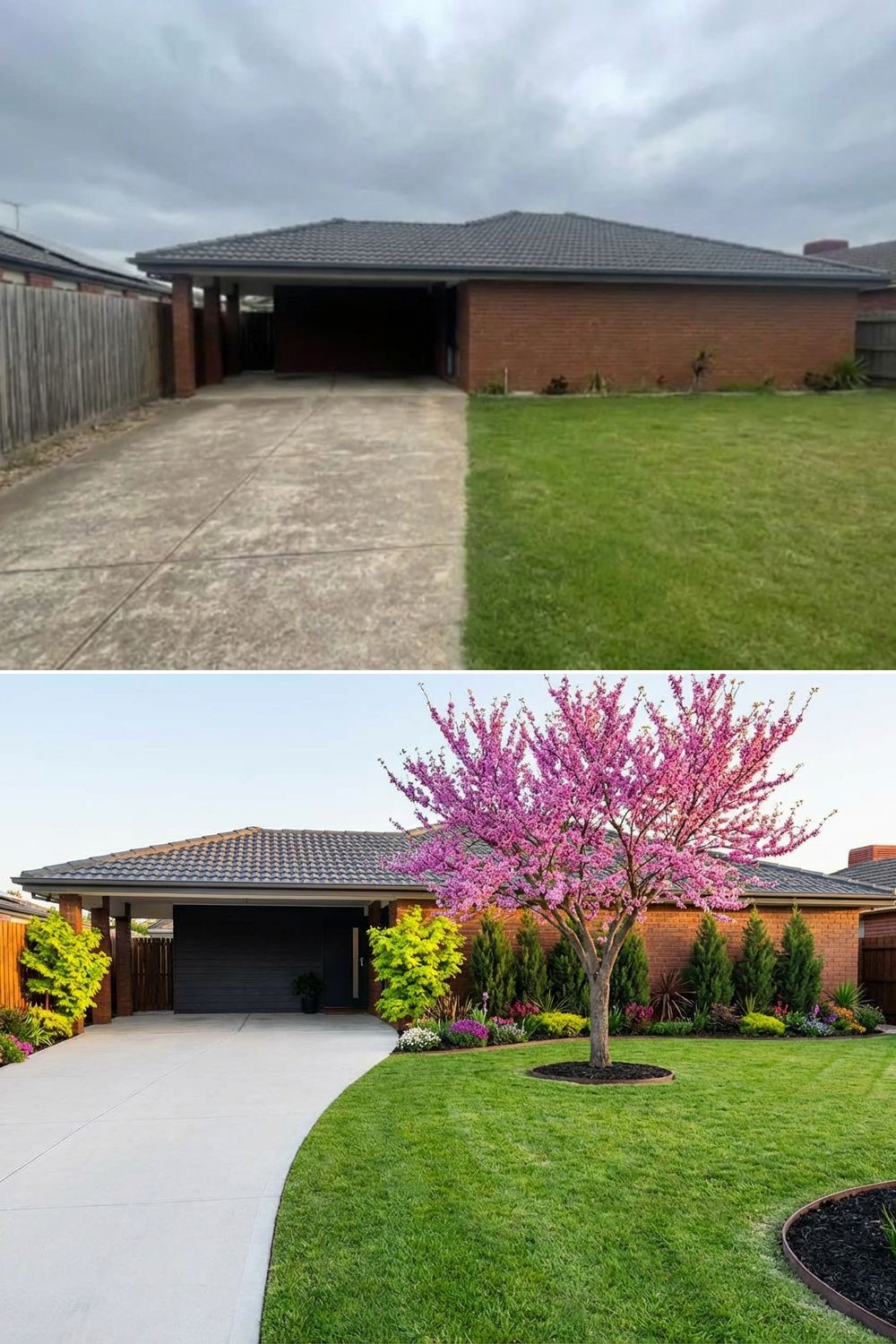
When a massive driveway dominates the front yard, widening the adjacent planting beds helps swallow the hard edges and shifts focus back to the home. Source: Drowning in Concrete: How to Give a Brick Box Serious Street Appeal.
6. The Dilemma: Should You Paint Your Brick?
When homeowners are frustrated with their curb appeal, painting the brick is often the first idea they have. It should be the last.
The Permanent Maintenance Cycle
Brick is a porous, breathable material. When you coat it in standard acrylic or latex exterior paint, you trap moisture inside the masonry. In climates with freeze-thaw cycles, this trapped moisture expands and causes the face of the brick to pop off—a destructive process called spalling. Once you paint brick, you are committing to a permanent cycle of scraping, repairing, and repainting every 5 to 7 years.
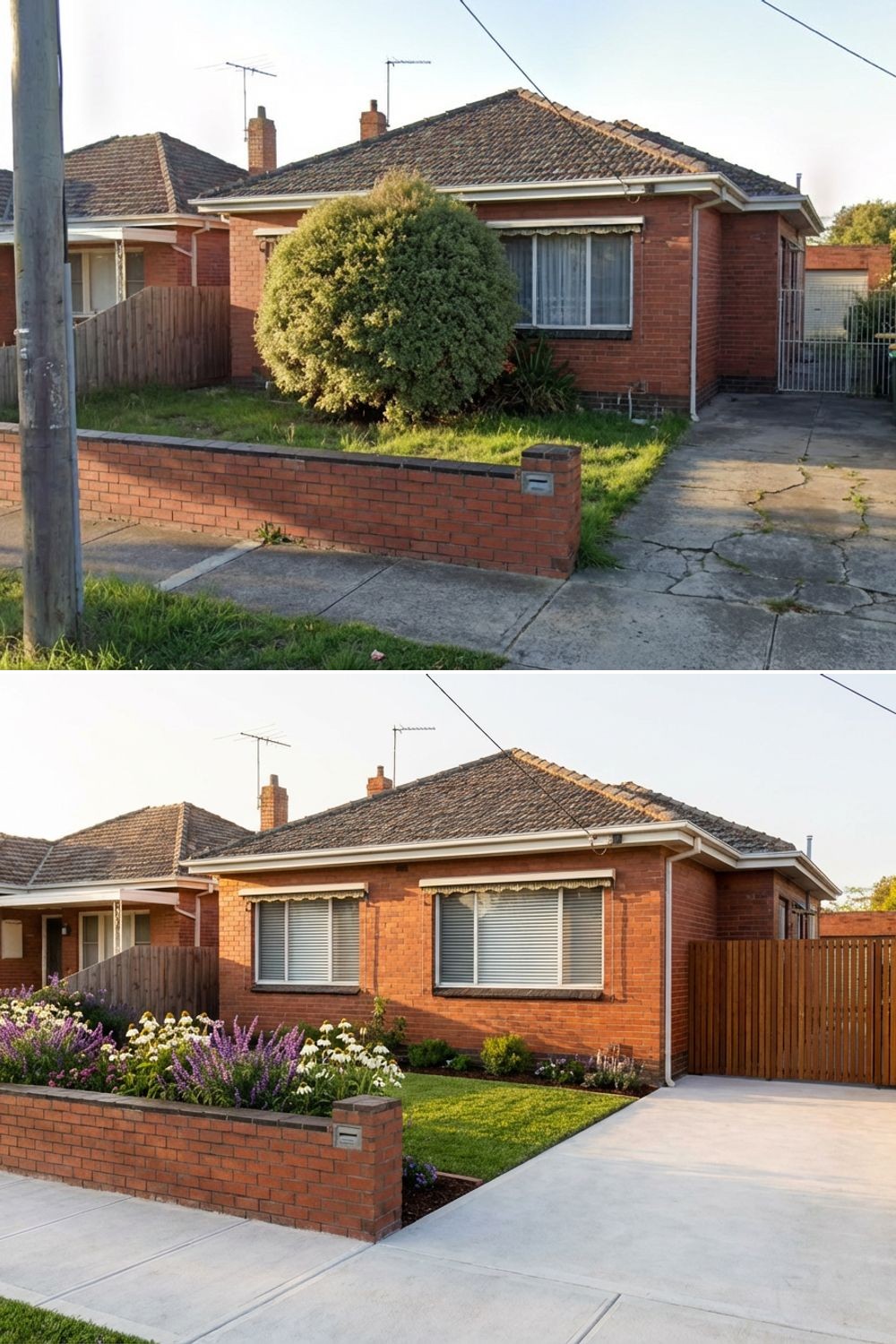
Painting exterior brick traps moisture and introduces a permanent maintenance cycle. Always exhaust trim and landscape changes first. Source: Don't Paint the Brick: How to Give a Boxy Red Ranch Real Cottage Charm.
Breathable Alternatives: Limewash and German Smear
If you absolutely must change the color of the masonry, avoid latex paint. Instead, look into mineral-based masonry paints, limewashing, or a German smear technique. Limewash calcifies to the brick, allowing it to breathe while providing a textured, old-world finish. However, be aware that these finishes will weather and patina over time, which requires an appreciation for an imperfect, cottage-style aesthetic.
When Altering the Brick is the Right Call
There are rare times when altering the brick is justified. If the home has suffered from poorly matched additions, features heavily patched and discolored areas from structural repairs, or is built with a truly unsalvageable, multi-colored novelty brick from a specific era, a breathable masonry coating can unify the chaotic facade.
But for the vast majority of homes, the brick isn't the problem. The frame around it is.
Once you know which brick-friendly direction fits your home, test brick-friendly curb appeal ideas on your house photo to compare tonal trim, new front doors, or deeper planting beds before committing to irreversible changes.